

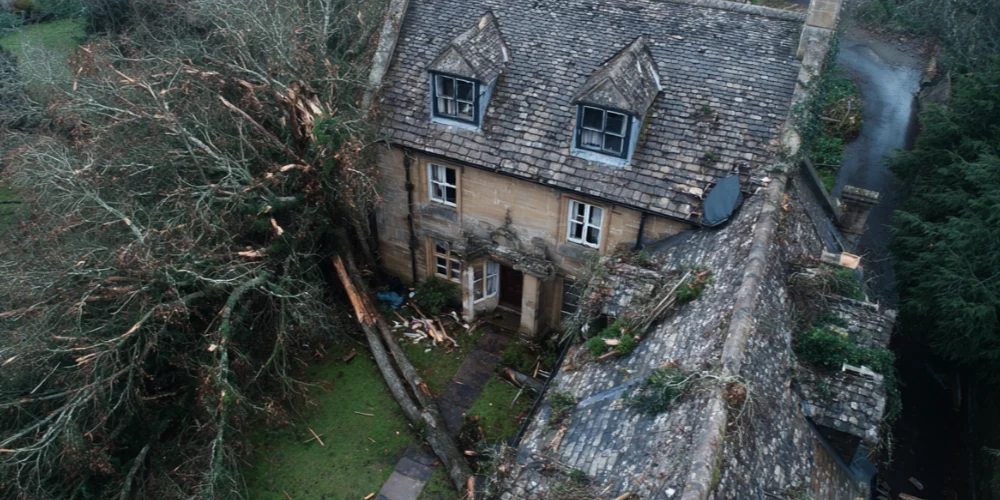
When storms hit or strong winds sweep through the area, most homeowners focus on clearing driveways, gardens, and patios of fallen branches and leaves. However, one part of the property that often suffers unseen damage is the roofline. Understanding how fallen branches and debris can damage your roofline is crucial for protecting your home’s structure, appearance, and long-term durability. Even small branches or wind-blown debris can cause problems that, if left unchecked, lead to leaks, rot, and costly repairs.
At Cotswold Roofing & Guttering, we’ve seen how storm debris affects roofs across Cheltenham and the Cotswolds. While the damage isn’t always visible from the ground, the impact of fallen branches can be significant. This guide explains the risks, signs of damage, and the importance of timely inspection and repair to protect your property. Once you understand how fallen branches and debris can damage your roofline, you’ll appreciate why preventative care and professional maintenance are essential to preserving your home.
The Hidden Dangers of Storm Debris
When branches or debris hit your roof, they don’t always cause noticeable damage. The effects can be subtle but develop into major issues over time.
The Immediate Impact of Fallen Branches
Large branches that land on a roof during a storm can crack tiles, puncture flat roof membranes, and bend guttering. Even if the debris slides off quickly, it can loosen fittings or dislodge shingles, allowing rainwater to enter. The force of impact from a heavy branch can also affect the structure beneath the roof surface, creating hairline fractures that widen with each rainfall.
How Small Debris Causes Long-Term Problems
Leaves, twigs, and moss may seem harmless, but when they accumulate on the roof or in gutters, they trap moisture. Over time, this moisture seeps into joints, fascia boards, and soffits, leading to decay and rot. Even lightweight debris can cause damage by blocking drainage systems, leading to water overflow and run-down walls or into roof cavities. These minor, gradual effects highlight how fallen branches and debris can damage your roofline even without a direct impact.
How Debris Affects Different Parts of the Roofline
Every section of your roofline plays a role in protecting your home. When debris builds up or causes impact damage, it can affect several interconnected components.
Tiles, Slates, and Roofing Membranes
Roof tiles and slates form the first line of defence against weather. Branches can chip, crack, or lift these materials, exposing the layers beneath to rain. On flat roofs, the problem is often punctures caused by sharp debris or trapped water, which gradually weaken the membrane. These minor breaches allow water to seep into insulation and timbers, leading to costly structural damage.
Gutters and Downpipes
Branches can bend or break guttering, while leaves and twigs block water flow. Once gutters overflow, water begins to soak the fascia boards and the walls below, creating damp patches and mould. In winter, blocked gutters freeze, expanding and splitting joints. Maintaining clean, clear gutters is vital for preventing damage that often starts small but spreads quickly.
Fascia and Soffit Boards
The fascia and soffit boards protect the edges of your roof and help support the gutter system. When debris builds up along the roofline, it traps moisture against these boards, leading to rot and decay. Wooden fascia boards are particularly vulnerable, though even uPVC can warp or discolour if constantly exposed to dampness and dirt. Once these boards fail, water can enter the roof cavity, causing internal damage.
Why You Should Act Quickly After a Storm
After heavy rain or strong winds, it’s tempting to assume that your roof survived unscathed. Unfortunately, many homeowners only discover damage weeks or months later when leaks or damp patches appear.
Early Inspection Prevents Escalation
Conducting a visual check after each major storm can prevent minor damage from worsening. While you may not be able to see the full extent from the ground, spotting signs like displaced tiles, sagging gutters, or debris lodged in corners indicates the need for a professional inspection. Acting quickly reduces repair costs and prevents more extensive problems from developing.
The Cost of Delaying Repairs
Ignoring debris damage can lead to expensive structural repairs. Once water enters the roof space, it can destroy insulation, stain ceilings, and compromise wooden beams. The longer moisture remains trapped, the more damage it causes. By addressing issues promptly, you save money in the long term and maintain your property’s value. Understanding how fallen branches and debris can damage your roofline gives homeowners an apparent reason to take early action before minor issues turn into major repairs.
Signs That Branches or Debris Have Damaged Your Roof
Recognising early warning signs helps you address damage before it spreads.
Visible Roof or Gutter Damage
Look for cracked or missing tiles, dents in metal flashing, or bent gutters. You may also notice leaves or small branches stuck in the guttering or visible water stains running down the exterior walls. These are clear signs that debris has disrupted the roofline’s drainage system.
Damp Patches and Leaks Indoors
Inside your home, check for water stains on ceilings or walls, particularly near roof edges. These indicate that water is penetrating through damaged roofing materials or soffit vents. A musty smell in your loft can also signal trapped moisture from blocked or leaking gutters.
Professional Roofline Inspections and Maintenance
When it comes to debris-related damage, professional inspections make all the difference.
The Value of a Thorough Roof Assessment
At Cotswold Roofing & Guttering, we provide detailed inspections that go beyond surface checks. Using advanced tools, we assess tiles, gutters, and fascia boards for hidden damage caused by storms or falling branches. Our goal is to identify minor problems before they become large-scale repairs, giving homeowners peace of mind.
Routine Maintenance for Long-Term Protection
Regular cleaning and maintenance prevent debris from accumulating in the first place. Scheduling seasonal gutter cleaning, trimming overhanging branches, and checking roof joints all contribute to a longer-lasting, healthier roofline. Preventative care ensures your home remains watertight and secure through all weather conditions.
The Role of Trees and Surrounding Vegetation
One of the leading causes of roofline damage comes from nearby trees.
The Risks of Overhanging Branches
Branches that hang close to or touch the roof can scrape tiles and clog gutters with leaves. During high winds, these branches can break and fall, causing direct impact damage. Trimming them back reduces the risk of accidents and prevents ongoing wear on your roof surface.
Managing Leaf and Moss Build-Up
Even without large branches, trees shed leaves, seeds, and moss that settle on the roof. This organic matter retains moisture, promoting the growth of algae and lichen. Over time, this damages roof coatings, leading to leaks. Regular cleaning removes this material before it can take hold and cause long-term issues.
How Weather Intensifies Roofline Damage
Understanding how fallen branches and debris can damage your roofline also means recognising how weather accelerates the process.
The Effects of Rain and Moisture
Rain carries small debris into roof joints and gutters, where it collects and decomposes. This process releases acids that corrode metals and weaken wood. If gutters become blocked, standing water freezes in winter, expanding and splitting seams or cracking uPVC fittings.
The Power of Wind and Frost
Strong winds push branches and debris against the roof surface, scraping protective layers and loosening fixtures. When frost follows rain, water trapped in cracks expands, widening the damage. These cycles of wind, rain, and ice are standard in Cheltenham’s climate, making regular maintenance essential to the longevity of roofs.
Preventative Measures to Protect Your Roofline
Protecting your roofline doesn’t always mean large-scale work – small, consistent actions make the most significant difference.
Regular Gutter Cleaning and Inspections
Cleaning gutters at least twice a year prevents water overflow and stops debris from building up. During inspections, roofers can identify damage early, keeping maintenance affordable and straightforward.
Installing Gutter Guards and Trims
Adding guards prevents leaves and twigs from clogging gutters. Similarly, well-fitted trims protect fascia boards from excess moisture. These small investments reduce ongoing maintenance and protect your home from water-related problems.
The Cotswold Roofing & Guttering Approach
As a trusted local company, we’ve helped hundreds of homeowners across Cheltenham and the Cotswolds repair and protect their rooflines from debris damage.
Experienced Local Roofline Specialists
Our team understands local weather conditions and the types of trees that most often cause roof issues. We tailor every repair and maintenance plan to suit the property’s design and environment, ensuring the best long-term outcome.
Combining Traditional Craftsmanship with Modern Techniques
We use modern tools and drone surveys to inspect roofs safely and accurately, while maintaining traditional skills in repair and restoration. This combination allows us to provide thorough, lasting solutions that restore both function and appearance.
The Long-Term Value of Roofline Care
Your roofline does more than hold the gutters; it protects your entire home from water ingress and weather exposure.
Extending Roof Life and Reducing Costs
Timely maintenance extends the life of your roof by preventing moisture damage and decay. Keeping gutters clear and repairing minor damage early saves thousands of pounds over time.
Protecting Kerb Appeal and Property Value
A clean, well-maintained roofline enhances your home’s kerb appeal. Prospective buyers see a cared-for property as a sign of quality, while neglected gutters and fascia boards can suggest hidden problems. Regular maintenance protects both the look and value of your home.
Protect Your Roofline Today with Expert Care and Inspection
Understanding how fallen branches and debris can damage your roofline highlights the importance of regular care and professional inspection. What may seem like a harmless layer of leaves or a few small twigs can lead to significant structural damage if ignored.
At Cotswold Roofing & Guttering, we help homeowners across Cheltenham and the Cotswolds protect their properties from the effects of debris and storm damage. Our experienced team provides comprehensive inspections, repairs, and maintenance services designed to keep your roofline clear, strong, and watertight.
If you’ve recently experienced high winds or noticed debris on your roof, now is the time to act. Schedule an inspection today and let our specialists ensure your roofline remains in top condition for years to come.
Related Articles
- Storm Damage Isn’t Always Obvious — Here’s What to Look For
- Why You Should Never Ignore Minor Roof Damage After Heavy Rain or Wind
- 10 Warning Signs That Your Roof Needs Immediate Attention
Fallen branches and debris can damage fascias and soffits as well as your roof. If you have noticed damage to your roofline boards, our fascia and soffit repair service can help. Browse our full range of roofing services for everything else. See our customer reviews.
This topic is covered in more depth in The Complete Guide to Roof Repairs in Cheltenham.