
Moss and algae may seem harmless at first glance, but over time they can cause serious damage to your roof. Many homeowners across Cheltenham and the Cotswolds only notice a problem when staining becomes heavy or leaks begin to appear inside the home. By that stage, the roof has often already suffered long-term harm.
Understanding how moss and algae shorten the life of your roof is essential for protecting your property, avoiding costly repairs, and preserving kerb appeal. In this guide, we explain how these growths develop, the damage they cause, the warning signs to look out for, and what professional treatment can do to extend your roof’s lifespan.
What Are Roof Moss and Algae
Moss and algae are both forms of organic growth that thrive in damp, shaded environments. Roofs provide the ideal conditions, especially on properties surrounded by trees, in north-facing positions, or in areas with high rainfall.
Moss is a small green plant that grows in clumps and spreads rapidly once established. It absorbs and stores moisture like a sponge. Algae is a microscopic organism that forms dark streaks or staining across roof tiles. While algae does not usually cause structural damage on its own, it creates the perfect environment for moss to take hold.
Once these growths become established, they begin to affect both the appearance and the performance of your roof.
Why Moss and Algae Grow on Roofs So Easily
Roof surfaces are constantly exposed to rain, mist, condensation, and airborne spores. In autumn and winter, fallen leaves and debris trap moisture on the roof surface, creating damp conditions for growth.
North-facing roof slopes receive less direct sunlight, which slows drying after rainfall. Clay tiles, concrete tiles, and slate all develop tiny surface pores over time, allowing moisture to cling to the surface. Once spores take hold, moss and algae spread quickly across the roof.
Chimney stacks, satellite dishes, and overhanging trees also create shaded areas where moisture lingers longer, increasing the risk of growth.
How Moss Damages Roof Tiles
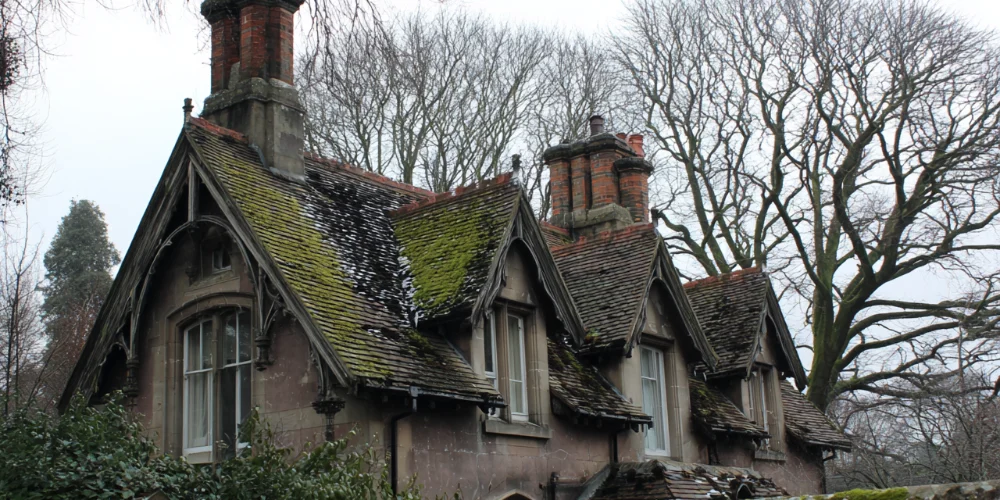
One of the biggest risks moss presents is its ability to retain water. When moss absorbs moisture, it holds it directly against the surface of the tiles. This constant dampness accelerates surface erosion, especially on concrete tiles.
As moss grows, its root-like structures work their way into tiny cracks and surface pores. Over time, this causes tiles to weaken and break down. During winter, trapped water freezes and expands, forcing cracks to widen and tiles to fracture.
Broken and weakened tiles allow rainwater to penetrate beneath the roof covering, leading to leaks, damp insulation, and timber rot within the roof structure.
How Moss Lifts and Displaces Roof Tiles
As moss thickens, it grows beneath the edges of roof tiles. This gradually forces tiles upward and out of alignment. Even a slight lift in a tile is enough to allow water to enter the roof space.
Displaced tiles create clear entry points for driving rain, strong winds, and snow. Once water gets beneath the roof covering, it travels along membranes and rafters until it finds a weak point inside the home.
Tile displacement caused by moss is a common reason for sudden leaks following storms.
How Algae Contributes to Roof Decay
Algae spreads as dark streaks across roof surfaces, particularly on lighter-coloured tiles. While algae does not usually dislodge tiles, it plays an important role in roof deterioration.
Algae holds moisture against the roof surface, slowing the drying process after rainfall. This sustained dampness encourages deeper moss growth and accelerates surface wear on tiles.
On concrete tiles, algae contributes to the gradual loss of the protective outer coating. Once that coating is worn away, the tile becomes porous and absorbs water far more easily.
How Moss and Algae Affect Roof Membranes
Modern roofs rely on breathable membranes beneath the tiles to provide secondary protection. When moss leads to cracked or displaced tiles, water reaches this membrane far more often than it should.
While membranes are designed to resist moisture, constant saturation weakens them over time. Once a membrane fails, moisture reaches the loft insulation and roof timbers directly.
Persistent damp in the roof space leads to timber decay, mould growth, and a reduction in thermal performance. Heating bills rise as wet insulation loses its ability to retain warmth.
The Hidden Damage Moss Causes to Roof Timbers
When moss-related leaks go unnoticed, water slowly soaks into rafters, battens, and structural timbers. Wood that remains damp over long periods becomes vulnerable to fungal decay and rot.
Dry rot and wet rot both weaken the structural strength of roof timbers. If left untreated, they can compromise the integrity of the entire roof frame.
At this stage, repairs often involve timber replacement, not just tile repairs. This dramatically increases costs and disruption.
How Moss Leads to Gutter Blockages and Water Damage
Moss does not stay on the roof forever. As it grows and breaks apart, it falls into the gutters below. Combined with leaf debris, this quickly leads to blockages.
Blocked gutters overflow during rainfall. Water spills down external walls, soaking brickwork and saturating cavity insulation. Over time, this creates damp patches, mould growth, and internal plaster damage.
Overflowing gutters caused by moss also damage fascias, soffits, and roofline timbers. Paint peels, timber rots, and gutter fixings weaken.
How Moss Increases Storm Damage Risk
Roofs affected by moss are far more vulnerable to storm damage. Lifted tiles, weakened surfaces, and blocked drainage all combine to increase the risk of water ingress during high winds and heavy rainfall.
During storms, water that should be directed into gutters instead flows beneath moss clumps and under lifted tiles. This allows rapid water entry into the roof structure.
Storm-related roof failures are far more common on roofs that already suffer from moss and algae growth.
How Moss and Algae Reduce Roof Lifespan
A well-maintained roof can last several decades. However, unchecked moss and algae growth can significantly reduce that lifespan.
By weakening tiles, damaging membranes, displacing coverings, and encouraging timber decay, moss accelerates every stage of roof deterioration. Roofs that should last 40 or 50 years may need replacement in half that time.
In almost every case, the homeowner could have extended the roof’s life through professional moss removal and preventative treatments.
How Moss and Algae Affect Kerb Appeal and Property Value
Beyond structural harm, moss and algae also have a major visual impact. Green clumps, black streaks, and stained tiles make a property look neglected.
Kerb appeal plays an important role in property value. Prospective buyers often assume visible moss indicates deeper roof problems. This can reduce buyer confidence and affect sale prices.
A clean, well-presented roof enhances the overall appearance of a property and reflects well on its maintenance history.
Why DIY Roof Cleaning Often Makes the Problem Worse
Many homeowners attempt to remove moss using pressure washers or harsh chemical treatments. Unfortunately, this often causes more damage than good.
High-pressure water strips protective coatings from tiles, drives water beneath roof coverings, and damages membranes. This can create new leaks that did not previously exist.
Harsh chemicals may kill surface moss but often fail to treat the root structures. Moss then regrows even faster. Uncontrolled runoff can also damage planting, lawns, and drainage systems.
Professional roof cleaning uses controlled, low-pressure methods and specialist treatments designed to eliminate moss safely without damaging the roof structure.
How Professional Moss Removal Protects Your Roof
Professional moss removal begins with manual scraping or controlled mechanical methods that lift moss without damaging tiles. This is followed by a biocide or soft wash treatment to kill remaining spores and prevent regrowth.
These treatments also target algae and lichen, restoring the roof’s surface and slowing future growth. When applied correctly, they continue working for months after treatment.
Professional cleaning also includes a full inspection of the roof surface, allowing early identification of cracked tiles, damaged flashing, and weakened areas.
How Regular Roof Cleaning Extends Roof Lifespan
Routine roof cleaning plays a major role in extending the life of your roof. By removing moisture-retaining moss, tiles stay dry for longer periods after rainfall.
Dry tiles resist frost damage better, reduce membrane saturation, and limit timber exposure to moisture. Gutters also stay clearer when moss is removed before it can break apart.
A clean roof drains properly, dries faster, and remains structurally sound for far longer than a neglected one.
The Best Time of Year to Remove Moss and Algae
Late spring through early autumn is the ideal time for moss and algae treatments. Warmer temperatures allow treatments to activate effectively and for the roof to dry fully after cleaning.
However, inspections can be carried out year-round. If moss has already caused leaks or tile displacement, immediate action is always recommended, regardless of season.
Delaying treatment through winter allows frost damage to worsen and increases the risk of storm-related failures.
How Often Should Roof Moss Be Treated
The frequency of treatment depends on location, roof type, and surrounding environment. Homes near trees or in shaded positions may require treatment every two to three years.
More exposed properties with good sun exposure may go longer between treatments. A professional inspection allows accurate assessment of growth patterns and future risk.
Preventative treatments applied before heavy moss regrowth establishes are far cheaper than major roof repairs.
Why Professional Roof Inspections Matter
Routine inspections ensure early detection of moss-related damage. Professionals check tile condition, ridge lines, flashings, membranes, gutter flow, and roof timbers where visible.
Many moss-related failures are invisible from ground level. Small tile cracks, early membrane sagging, and subtle displacement cannot be diagnosed without proper access.
Early intervention prevents leaks, rot, and large-scale repair bills.
How Cotswold Roofing & Guttering Protects Roofs from Moss Damage
At Cotswold Roofing & Guttering, we provide professional roof cleaning, moss removal, and preventative roof care across Cheltenham and the Cotswolds.
Our team uses safe, controlled methods to remove moss and apply long-lasting biocide treatments. We also carry out full roof inspections to identify early signs of damage caused by organic growth.
From period homes to modern properties, we tailor our approach to each roof type to ensure effective, long-term protection.
Stop Moss and Algae Before They Shorten Your Roof’s Lifespan
Moss and algae may begin as a minor cosmetic issue, but left untreated, they cause serious roof damage. Moisture retention, tile displacement, membrane failure, timber decay, gutter blockages, and internal leaks all stem from unchecked organic growth.
Understanding how moss and algae shorten the life of your roof allows you to act early. Professional removal, routine treatments, and regular inspections are the most effective ways to protect your investment.
If your roof shows signs of moss, staining, or persistent damp, contact Cotswold Roofing & Guttering today for expert advice, professional treatment, and long-term roof protection across Cheltenham and the Cotswolds.
Related Articles
- Top Signs Your Roof Needs Maintenance Before Winter Arrives
- The Ultimate Roof Maintenance Checklist
- Your Roof Isn’t Old — It’s Just Been Neglected
If moss and algae have taken hold on your roof, our team can remove them safely and effectively. Browse our full range of roofing services for cleaning, repairs, and maintenance. Moss and algae can also build up on fascias and soffits, so consider fascia and soffit cleaning at the same time. Read what our customers say.
For the full picture, see the full guide to roof maintenance.