
What Do Fascias and Soffits Do?
What do fascias and soffits do? Most homeowners in Cheltenham know what a roof is and what gutters are for, but fascias and soffits are far less understood. They are the boards that run along the lower edge of your roofline, and they play a more important role than most people realise. When they fail, the consequences go far beyond cosmetics.
Understanding what fascias and soffits do helps you spot problems early and avoid expensive repairs later. This guide explains each component, why it matters, and what to look out for on your own property.
What Is a Fascia Board?
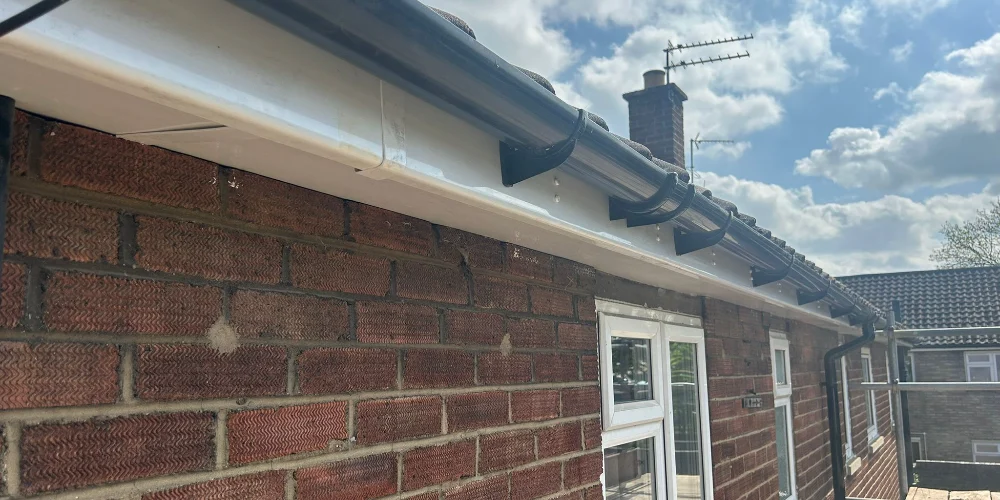
The fascia is the vertical board that runs along the bottom edge of your roof, directly behind the guttering. On most properties in Cheltenham, fascia boards are either painted timber or white uPVC. However, aluminium fascias are also becoming increasingly popular.
The fascia serves two main purposes. First, it provides a secure fixing point for the guttering. Without a solid fascia, your gutters would have nothing to hang from. Second, it seals the gap between the roof edge and the wall, which prevents rain, wind, and pests from entering the roof space.
What Happens When a Fascia Fails?
When a fascia board rots or deteriorates, the guttering it supports becomes unstable. As a result, you may notice sagging gutters, leaking joints, or gutters that pull away from the roofline. Many homeowners assume these are gutter problems, but the real cause is often a failing fascia underneath. Fixing the gutters without addressing the fascia is a temporary solution at best.
In addition, a damaged fascia creates a gap that allows water to reach the rafter ends. Over time, this causes the timber rafters themselves to rot, which leads to a much more serious and costly repair.
What Is a Soffit Board?
The soffit is the horizontal board that sits underneath the fascia, bridging the gap between the wall of your house and the bottom edge of the roof. It is the board you see when you look up at the underside of the roof overhang. Soffits are usually made from the same material as the fascias.
Ventilation: The Soffit’s Most Important Job
The soffit has a critical ventilation role that many homeowners are unaware of. Most soffits include small ventilation holes or strips that allow air to circulate through the roof space. This airflow prevents condensation from building up in the loft, which can otherwise lead to damp, mould, and timber rot.
Proper soffit ventilation is especially important on older properties across Cheltenham where loft insulation has been upgraded, but ventilation has not been addressed. Adding insulation without maintaining airflow traps moisture in the roof space. Consequently, the timbers stay damp and deteriorate faster than they would without any insulation at all.
Keeping Pests Out
Soffits also prevent birds, insects, and rodents from entering the roof space. Gaps in damaged soffits are one of the most common entry points for pigeons, starlings, and squirrels in properties across Cheltenham and the Cotswolds. Once pests establish themselves in a loft space, they cause noise, mess, and further damage to insulation and wiring. Therefore, keeping soffits in good repair is an effective form of pest prevention.
Why Fascias and Soffits Matter More Than You Think
Now that you understand what fascias and soffits do, it is easier to see why they matter. Together, they protect the timber rafters and roof structure from water damage. They keep the roof space ventilated and dry, and support your guttering. They prevent pests from nesting in your loft. When they are in good condition, they do all of this quietly in the background.
When they start to fail, however, the problems escalate quickly. Rotten fascia boards cause gutters to fail, which leads to water pouring down the walls of your property. This can cause damp, staining, and damage to brickwork and render. Damaged soffits allow moisture and pests into the roof space, which leads to more extensive and expensive repairs. According to the National Federation of Roofing Contractors, neglected roofline boards are one of the most common causes of avoidable structural damage in residential properties.
How to Spot Fascia and Soffit Damage
You can check the condition of your fascias and soffits from ground level with a pair of binoculars or simply by looking up. Here are the signs that suggest something needs attention.
Visual Warning Signs
Peeling or flaking paint on timber boards usually means moisture has penetrated the surface. Visible rot, soft spots, or boards that look swollen or warped need urgent attention. Similarly, gaps between the boards and the wall indicate that the boards have shifted or shrunk. Staining or discolouration, particularly green or black marks, often points to persistent damp.
Gutter-Related Clues
Look for areas where the guttering has pulled away from the roofline or appears to sag between brackets. These problems often indicate that the fascia behind the gutter is no longer solid enough to hold the fixings. If you notice that one section of the gutter drops lower than the rest, the fascia in that area may be rotten even if it looks acceptable from a distance.
Wildlife Clues
Birds flying in and out of your roofline during nesting season are a strong indicator that your soffits have gaps or holes. Scratching noises in the loft, particularly at dawn and dusk, suggest squirrels or birds have found a way in. In most cases, the entry point is a damaged soffit board.
Timber vs uPVC: Which Is Better?
Older properties in Cheltenham typically have timber fascias and soffits. Timber looks traditional and can be painted to match your property, but it requires regular maintenance. You need to sand and repaint timber boards every three to five years to keep them protected from the weather. Once the paint fails, moisture gets in, and rot begins.
Many homeowners now choose to replace timber with uPVC when the time comes. uPVC is maintenance-free, rot-proof, and available in a range of colours and woodgrain finishes that closely replicate the look of real timber. From ground level, it can be difficult to tell the difference between quality woodgrain uPVC and painted timber. As a result, uPVC has become the most popular choice for roofline replacements across Cheltenham.
Aluminium is a third option that offers a slimmer profile and a premium powder-coated finish. It costs more than uPVC but lasts even longer and never fades. We work with all three materials and can advise on the best option for your property. Visit our fascia and soffit services page for more details on what we offer.
When to Take Action
If you have noticed any of the warning signs above, it is worth getting a professional assessment sooner rather than later. Small problems with fascias and soffits are cheap to fix. Large problems, especially those involving rotten rafter ends or water damage inside the roof space, cost significantly more.
A re-roof or roof replacement is the ideal time to address your roofline, because the scaffolding is already in place and the boards are fully accessible. However, fascia and soffit work can be carried out independently at any time of year.
Now You Know What Fascias and Soffits Do
They protect your roof structure, support your gutters, ventilate your loft, and keep pests out. They are not glamorous, but they are essential. Keeping them in good condition prevents a chain of problems that can affect your entire property.
If you are unsure about the condition of your fascias and soffits, or you have spotted signs of damage, get in touch. We carry out fascia and soffit inspections, repairs, and replacements across Cheltenham and Gloucestershire. Call us on 01242 361 626 or get in touch through our contact form for a free, no-obligation assessment.
Related Articles
- 5 Warning Signs Your Fascias and Soffits Need Immediate Repair
- Should You Repair or Replace Your Fascias and Soffits?
- uPVC vs Timber Fascias: Which Is Better for Your Home?
Cotswold Roofing & Guttering provides specialist fascia and soffit services across Cheltenham and Gloucestershire. Strong winds and falling branches can cause serious damage to your roofline. Find out more in our post about how fallen branches and debris can damage your roofline. See our customer reviews.