

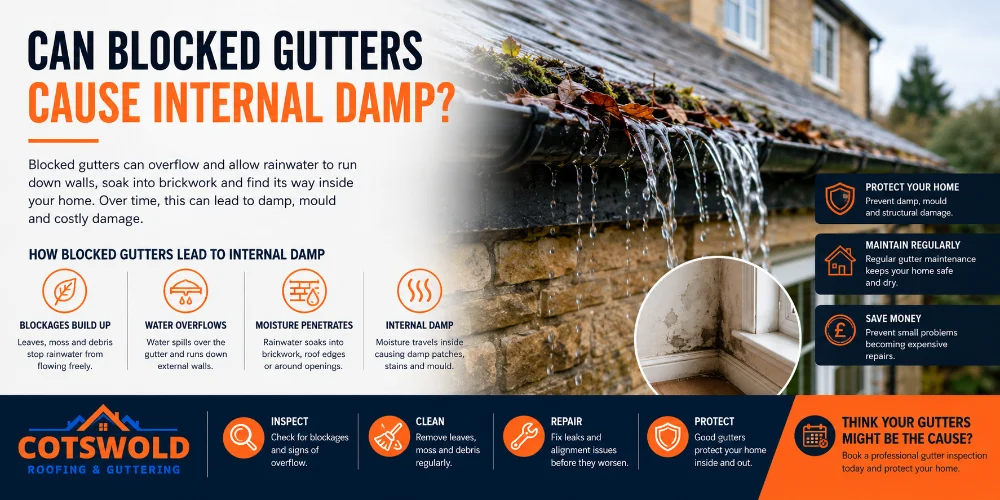
Blocked gutters are one of the most overlooked causes of internal damp in UK homes. Many homeowners assume damp is caused by poor ventilation, rising moisture, or condensation. However, rainwater management problems outside the property often create the conditions that allow damp to appear inside.
The problem is that gutter failures rarely announce themselves immediately. Water may overflow for weeks or months before visible signs appear internally. By the time staining, mould, or peeling paint becomes obvious, moisture may already have affected walls, ceilings, insulation, or timber.
This article explains how blocked gutters cause internal damp, what warning signs to look for, and what homeowners in Cheltenham should do before minor drainage issues become expensive building repairs.
How Gutters Protect Your Property
Gutters do far more than collect rainwater.
Their job is to move water safely from the roof and away from the building through downpipes and drainage systems. When gutters work properly, rainwater is controlled and directed away from vulnerable parts of the property.
When gutters become blocked, water begins overflowing where it should not.
Instead of flowing into drainage systems, water can run:
- Down external walls
- Behind gutter brackets
- Into the roof edges
- Around windows and doors
- Into cavities and masonry
Over time, repeated wetting allows moisture to move into the building structure.
If you want a broader understanding of gutter issues, read Common Gutter Problems and How to Avoid Them.
How Blocked Gutters Lead to Internal Damp
Internal damp caused by gutters is usually the result of repeated exposure rather than a single event.
Overflow Saturates External Walls
When gutters overflow repeatedly, brickwork absorbs moisture.
Brick and mortar are porous materials. Although they are designed to handle normal weather exposure, constant saturation allows water to travel deeper into the structure.
Eventually, this moisture reaches internal finishes.
Water Finds Hidden Routes
Water rarely travels in straight lines.
Overflowing gutters often direct water:
- Behind fascia boards
- Into roof junctions
- Behind render
- Around window openings
This means internal damp may appear far away from the actual gutter blockage.
Roofline Components Begin to Fail
Persistent moisture also affects:
- Fascia boards
- Soffits
- Roof edges
- Timber supports
If left untreated, the issue can move from damp to structural repair.
Signs That Gutters May Be Causing Internal Damp
Many homeowners focus on indoor symptoms and never inspect the roofline.
Warning signs include:
Outside
- Water running over gutter edges
- Green staining on the walls
- Overflow during rainfall
- Vegetation growing in gutters
- Damp patches beneath downpipes
Inside
- Peeling paint
- Damp staining
- Musty smells
- Mould growth
- Discoloured ceilings
If hidden damage may already be present, see How to Identify and Fix Hidden Gutter Damage.
Why This Matters More in Cheltenham
Cheltenham has a large number of older homes, including Regency and Victorian properties.
Many include parapets and concealed gutters that cannot be fully inspected from street level.
These hidden drainage systems can overflow internally without an obvious external warning.
This creates a greater risk of internal damp because water may remain trapped for longer before being discovered.
For period homes, specialist inspection methods are often needed.
You may also find Historical Properties in Cheltenham: Specialist Gutter Repair Tips useful.
Can Damp From Gutters Be Mistaken for Condensation?
Yes, and this happens more often than people realise.
Condensation usually appears:
- On colder surfaces
- Around windows
- In poorly ventilated rooms
Damp caused by gutters often:
- Appears after rainfall
- Follows wall lines
- Creates localised staining
- Worsens over time
Understanding the source is critical because the wrong treatment will not solve the problem.
What Happens If You Ignore Blocked Gutters
Small drainage issues often become larger building problems.
Long-term consequences may include:
- Internal redecorating
- Damaged plaster
- Timber decay
- Roof edge deterioration
- Structural movement
This process is explained further in How Small Gutter Issues Turn Into Big Structural Problems.
For homes built on clay-rich ground, drainage can also affect foundations. See Gutters vs Clay Soil: How Poor Drainage Affects Foundations in the Cotswolds.
How to Prevent Internal Damp Caused by Gutters
Prevention is usually straightforward.
Good maintenance includes:
Regular inspections
Check gutters visually after heavy rainfall.
Planned cleaning
Remove leaves and debris before blockages develop.
Prompt repairs
Address leaks before overflow becomes persistent.
Seasonal maintenance
Autumn and winter are particularly important.
For practical guidance, read How to Maintain Your Gutters and Prevent Costly Repairs and The Ultimate Seasonal Gutter Repair Checklist.
When Professional Gutter Cleaning Makes Sense
Not all blockages are visible.
Professional inspections help identify:
- Hidden overflow points
- Internal gutter failures
- Joint leaks
- Alignment issues
If you are unsure whether cleaning is needed, see 5 Signs It’s Time for a Professional Gutter Cleaning.
Safety First
Gutter work involves working at height.
The Health and Safety Executive treats roof and ladder work as high risk. Household inspections should remain at ground level wherever possible.
If problems are suspected, professional assessment is the safest approach.
What Should Homeowners Do Next?
If you have damp appearing internally and cannot identify the cause, do not assume the problem is inside the property.
Blocked gutters are often responsible.
A professional inspection can identify whether rainwater is entering externally and allow the problem to be fixed before more extensive damage develops.
If you think your gutters may be contributing to damp problems, arrange an inspection before the next period of heavy rain.