When roof problems appear, one of the first questions homeowners ask is whether the roof can be repaired or whether replacement is the better long-term option.
The answer is rarely straightforward.
Some roofing issues can be resolved quickly with targeted repairs. Others indicate broader deterioration that makes replacement the more sensible approach.
Making the wrong decision can lead to repeated spending, ongoing disruption, and avoidable future work.
This guide explains how professionals assess roofs and what factors determine whether repair or replacement is the right route.
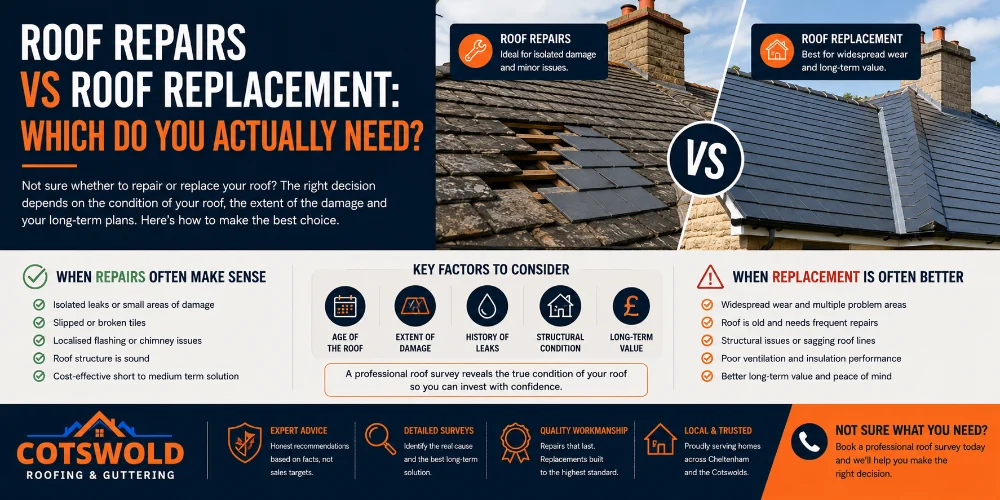
When Roof Repairs Usually Make Sense
Repairs are normally the best option when problems are isolated.
Common examples include:
- A small roof leak
- Slipped or cracked tiles
- Localised storm damage
- Minor flashing failure
- Isolated gutter-related damage
Repairs are particularly effective when:
- The roof structure remains sound
- Most materials are still performing well
- Damage has been identified early
- Water ingress has been limited
Prompt repairs can significantly extend a roof’s lifespan.
Signs That Roof Replacement May Be More Appropriate
Replacement becomes more attractive when defects are widespread.
Warning signs include:
Repeated Repairs
If the same area repeatedly develops problems, the underlying system may be reaching the end of its service life.
Multiple Leak Locations
Several leak points often indicate broader failure.
Structural Movement
Movement in roof lines may suggest deeper issues.
Extensive Material Deterioration
Large areas of cracked, porous or deteriorated coverings may no longer justify continued repair.
The Age of the Roof Matters, But It Is Not Everything
Many homeowners assume age automatically means replacement.
That is not always true.
A well-maintained older roof may outperform a neglected newer roof.
Condition matters more than age alone.
Professional assessment should consider:
- Material condition
- Structural condition
- Ventilation
- Drainage performance
- Previous repair history
Why Proper Diagnosis Is Essential
One of the biggest mistakes homeowners make is assuming visible symptoms reflect the true condition of the roof.
Water often travels through the structure before becoming visible.
This means diagnosis should always happen before decisions are made.
If you have not already read it, see:
Why Roof Leaks Often Appear Far Away From the Actual Damage
Common Roof Problems That Can Often Be Repaired
Issues that frequently respond well to repair include:
Flashing Failure
Lead and junction details can often be repaired.
Storm Damage
Localised damage does not automatically mean replacement.
Chimney Defects
These often affect only isolated areas.
Drainage Issues
Overflowing gutters regularly create roof symptoms.
Situations Where Replacement Often Delivers Better Value
Replacement may become the better investment when:
- Maintenance costs continue to increase
- Defects affect multiple elevations
- Significant upgrades are needed
- Energy efficiency improvements are planned
Replacement can also provide an opportunity to improve ventilation and overall roof performance.
Why Cheltenham Properties Need Careful Assessment
Cheltenham contains many older and period properties.
Features that complicate decisions include:
- Hidden drainage systems
- Regency parapets
- Chimney stacks
- Valley gutters
- Heritage construction methods
Older roofs often require more investigation before major decisions are made.
A visible leak does not automatically mean replacement.
Roof Surveys Help Prevent Expensive Mistakes
Professional surveys reduce uncertainty.
Detailed inspections help identify:
- Actual defect locations
- Remaining roof lifespan
- Hidden moisture issues
- Repair feasibility
This allows homeowners to make informed decisions.
The Cost of Delaying the Decision
Whether repair or replacement is needed, delaying action usually increases risk.
Water ingress can lead to:
- Ceiling damage
- Timber deterioration
- Damp
- Increased repair complexity
Early intervention almost always provides more options.
Safety First
Roof assessment involves work at height.
The Health and Safety Executive advises against accessing roofs without suitable equipment and training.
Professional assessment remains the safest option.
What Should Homeowners Do Next?
If you are deciding between roof repair and replacement, avoid making the decision based on appearance alone.
The most effective approach is to understand:
- The cause of the problem
- The extent of deterioration
- The expected lifespan remaining
Once those answers are clear, the right decision becomes far easier.
Professional assessment helps ensure money is spent where it delivers the greatest long-term value.