

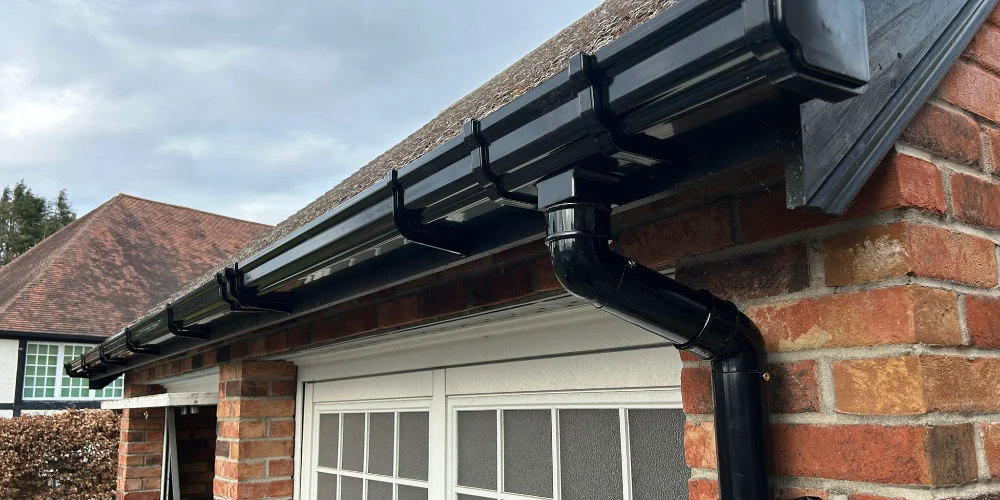
Gutters play a far more critical role in your home than many people realise. While they may seem like a simple finishing detail along the roofline, they are actually a crucial defence against water damage, structural decay, damp problems, and foundation movement. Choosing the right gutter profile, material, and type for your roof design can make the difference between a reliable drainage system and one that causes persistent issues.
In this guide, we will explore the most common gutter profiles, the most widely used gutter materials, and the different types of gutters based on their location and function. Understanding these options will help you make informed decisions whether you are replacing failing gutters, upgrading an older system, or installing brand-new guttering on a property in Cheltenham, the Cotswolds, or beyond.
Why Gutter Choice Matters More Than You Think
Many homeowners only think about their gutters when something goes wrong. Overflowing water, wall staining, damp patches, and leaking joints often draw attention to a system that has been struggling for some time. In reality, the correct combination of shape, material, and placement determines how efficiently rainwater is handled during both light showers and heavy storms.
A gutter that is too small for the roof area can overflow during prolonged rain. A material that is poorly suited to your property can corrode, crack, or warp prematurely. A poorly positioned gutter may direct water towards the building rather than away from it. All of these issues can be avoided with informed planning and professional installation.
Common Gutter Profiles and Their Characteristics
The profile, or shape, of a gutter affects both its appearance and its ability to handle rainfall. Each profile has its own advantages depending on property style, roof size, and local weather conditions.
Half Round Gutters
Half-round gutters feature a traditional U-shaped profile that has been used for centuries. They are particularly common on period properties, cottages, and heritage homes throughout the Cotswolds.
The smooth, curved design allows water to flow freely with minimal resistance, making half-round gutters very efficient in light to moderate rainfall. They are less prone to debris buildup than more angular designs because leaves and moss are less likely to lodge in corners.
However, half-round gutters generally have a lower water capacity than deeper modern profiles. This means they may struggle during prolonged or intense rainfall on larger roof areas. They remain a popular choice where visual authenticity and simplicity are priorities.
Ogee Gutters
Ogee gutters are instantly recognisable by their decorative S-shaped profile. Inspired by Victorian architecture, these gutters add character and visual detail to a property’s roofline.
In addition to their visual appeal, Ogee gutters offer a slightly higher water capacity than half-round systems. This makes them suitable for moderate rainfall while retaining a traditional appearance. They are commonly fitted to older terraces, townhouses, and properties where maintaining original character is essential.
Because of the decorative shape, Ogee gutters can collect debris more easily if not maintained regularly. Homeowners should ensure consistent cleaning to prevent blockages from forming within the curved sections.
Square Gutters
Square or square-line gutters offer a clean, modern, angular appearance. They are often chosen for newer homes, extensions, and properties with contemporary architectural features.
One of the most significant advantages of square gutters is their improved water-handling capacity compared to half-round systems. The deeper design allows them to cope better with heavy rainfall and storm conditions, making them well-suited to modern roof designs with larger surface areas.
Their sharp lines also complement modern fascias and soffits, creating a crisp roofline finish. However, the internal angles can encourage debris buildup if gutters are not properly maintained.
Deep Flow Gutters
Deep flow gutters are explicitly designed for high-capacity drainage. They are deeper and broader than standard profiles and are ideal for homes in areas prone to heavy rainfall.
These gutters are commonly fitted to larger modern homes, commercial properties, and buildings with expansive roof surfaces. Their greater depth allows them to channel high volumes of water safely away from the roof edge, reducing the risk of overflow during sudden downpours.
Deep flow systems are especially valuable where climate conditions are unpredictable and where standard profiles struggle to cope. They provide added reassurance for homeowners concerned about storm damage and water ingress.
Box Gutters
Box gutters feature a flat-bottomed, squared-off profile and are often installed internally or integrated into the roof structure. They are commonly found on flat roofs, commercial buildings, and contemporary architectural designs.
These gutters allow concealed drainage, providing a spotless, uninterrupted roofline appearance. However, because they are hidden from view, blockages and leaks can sometimes go unnoticed until internal damage appears.
Regular inspection and maintenance are essential for box gutters, as failure can lead to significant water buildup within the roof structure. When properly installed and maintained, they provide a sleek, effective drainage solution for modern properties.
Common Gutter Materials and Their Performance
The material used for your guttering system affects durability, maintenance requirements, appearance, and overall cost. Each option offers its own balance between longevity, price, and performance.
uPVC Gutters
uPVC is by far the most popular gutter material in the UK. It is affordable, lightweight, easy to install, and requires minimal maintenance. It is available in a wide range of colours and profiles, making it suitable for both traditional and modern homes.
uPVC does not rust and is resistant to general weather exposure. However, it can become brittle over time due to prolonged UV exposure, particularly on south-facing elevations. While it offers excellent value, it may not last as long as metal alternatives.
For most homeowners, uPVC provides the best balance of cost, functionality, and aesthetics.
Cast Iron Gutters
Cast iron gutters are the traditional choice for many period properties. They are exceptionally durable and can last for decades when properly maintained.
Their classic appearance is ideal for heritage homes and conservation areas where preserving historical character is essential. However, cast iron is heavy and requires specialist installation. It is also one of the most expensive gutter materials and requires periodic painting to prevent corrosion.
Despite these drawbacks, cast iron remains a premium option for traditional buildings where authenticity is paramount.
Aluminium Gutters
Aluminium is a popular modern alternative to uPVC and cast iron. It is lightweight, rust-proof, highly durable, and offers a clean contemporary appearance.
Aluminium gutters are available in seamless options, reducing the number of joints and lowering the risk of leaks. They provide an excellent balance between cost and performance and are suitable for both domestic and commercial properties.
Because aluminium does not corrode as readily as steel or cast iron, it offers long-term reliability with minimal maintenance.
Steel Gutters
Steel gutters are strong and durable, but must be galvanised or coated to prevent rust. When properly protected, they can perform well and offer good structural rigidity.
Steel is often used where impact resistance is essential, such as on industrial buildings or exposed locations. However, if the protective coating becomes damaged, corrosion can spread quickly.
Steel gutters can be cost-effective but require careful material selection and professional installation to ensure long-term performance.
Copper Gutters
Copper is considered a premium gutter material. It is exceptionally long-lasting and naturally develops a distinctive green patina over time, which many homeowners find visually striking.
Copper does not rust and offers excellent resistance to weathering. However, it is the most expensive gutter material and is typically reserved for high-end properties, heritage buildings, and architectural projects where aesthetics and longevity are the primary concerns.
Once installed, copper gutters require very little maintenance and can last for generations.
Zinc Gutters
Zinc offers similar benefits to copper but at a slightly lower cost. It forms a natural protective patina that shields the underlying metal from corrosion and UV exposure.
Zinc is highly durable, environmentally friendly, and visually well-suited to both modern and heritage properties. It provides a sleek, understated appearance and performs exceptionally well in a wide range of weather conditions.
Like copper, zinc gutters are a premium choice with excellent longevity.
Types of Gutters by Location and Function
Not all gutters serve the same purpose. Their location on the building and the way they manage water flow determine how they should be designed and installed.
Eaves Gutters
Eaves gutters are the most common type of guttering found on residential properties. These are installed along the roof’s edge and collect rainwater directly as it runs off the tiles.
They direct water into downpipes that carry it safely away from the building’s foundations. Eaves gutters work in conjunction with fascia boards and are easy to inspect and maintain.
Because they form the primary drainage system for the roof, their size, profile, and condition directly affect how well your home handles rainfall.
Valley Gutters
Valley gutters are installed internally at the point where two roof sections meet. These gutters are usually made of metal and handle a high volume of water.
Because valley gutters collect water from two slopes at once, they must be perfectly sealed and sized correctly. Any failure in a valley gutter can lead to rapid internal water ingress and significant damage.
Regular inspection is essential for valley gutters, particularly after storms and in autumn, when leaves and debris can accumulate quickly.
Parapet Gutters
Parapet gutters are commonly used on flat roofs and drain water through openings in the parapet wall rather than over the edge of the roof.
These systems are often concealed from view, enhancing the building’s visual appearance but also increasing the importance of maintenance. If parapet gutters become blocked, water can quickly pool on the roof surface.
Proper design, installation, and routine maintenance are critical to prevent hidden leaks and structural damage.
How Gutter Profiles, Materials, and Placement Work Together
The effectiveness of a guttering system depends on how well its components work together. A large roof surface paired with a shallow profile may lead to overflow. A premium material fitted to a poorly designed drainage system will still fail. Every property requires a tailored combination of profile, material, and functional type.
For example, a period property in Cheltenham might suit cast iron half-round gutters for both appearance and appropriate water flow. A modern family home may benefit from deep-flow uPVC or aluminium square gutters to efficiently manage heavy rainfall. A flat-roof extension may require a concealed box gutter system to maintain clean architectural lines.
When to Repair and When to Replace Gutters
Many homeowners delay gutter replacement until severe damage occurs. Warning signs that your guttering system may need attention include persistent leaks, sagging sections, overflowing during rainfall, rust stains, peeling paint near the roofline, and damp walls.
Minor joint leaks and minor blockages can often be repaired. However, widespread corrosion, structural failure, or outdated designs that cannot cope with modern rainfall levels usually indicate that replacement is the more cost-effective long-term solution.
The Importance of Professional Installation
Even the best materials and profiles will fail if they are not installed correctly. Proper falls must be set to direct water efficiently into downpipes. Brackets must be spaced to prevent future sagging. Joints must be sealed with appropriate materials.
At Cotswold Roofing & Guttering, gutter installations are carried out with precision to ensure reliable water flow, structural security, and long-term durability. Every system is selected based on the specific needs of the property rather than a one-size-fits-all approach.
Protecting Kerb Appeal and Property Value
Gutters play a significant role in your home’s kerb appeal. Stained walls, overflowing drains, and sagging sections make a property look neglected. A clean, well-fitted guttering system enhances the appearance of the roofline and protects the building fabric beneath.
From an investment perspective, properly functioning gutters reduce the risk of damp, mould, structural movement, and costly repair bills. They are a small but critical component of overall property care.
Final Thoughts on Choosing the Right Gutter System
Understanding gutter profiles, materials, and functional types helps homeowners make informed decisions that protect their property and budget. From traditional half-round cast-iron systems to modern deep-flow aluminium installations, every home can benefit from a gutter solution tailored to its needs.
If you are unsure which gutter profile or material is right for your property, professional advice ensures your system will withstand local weather conditions, match the architectural style of your home, and perform reliably for years to come.
For expert gutter inspections, repairs, and replacement across Cheltenham and the Cotswolds, Cotswold Roofing & Guttering provides trusted workmanship, straightforward advice, and long-lasting results.
Related Articles
- Buying a ‘Project’ House? Why the Gutters Should Be Top of Your Checklist
- Choose the Best Gutter Replacement Company in Cheltenham
- How to Tell When It's Time for Gutter Replacement
Understanding gutter profiles and materials helps you make the right choice for your property. Cotswold Roofing & Guttering can advise on the best options as part of our guttering services. If you are not sure whether your gutters need replacing or just repairing, read our guide on common gutter problems and how to avoid them. Read what our customers say.
For the full picture, see the full guide to guttering in Cheltenham.