

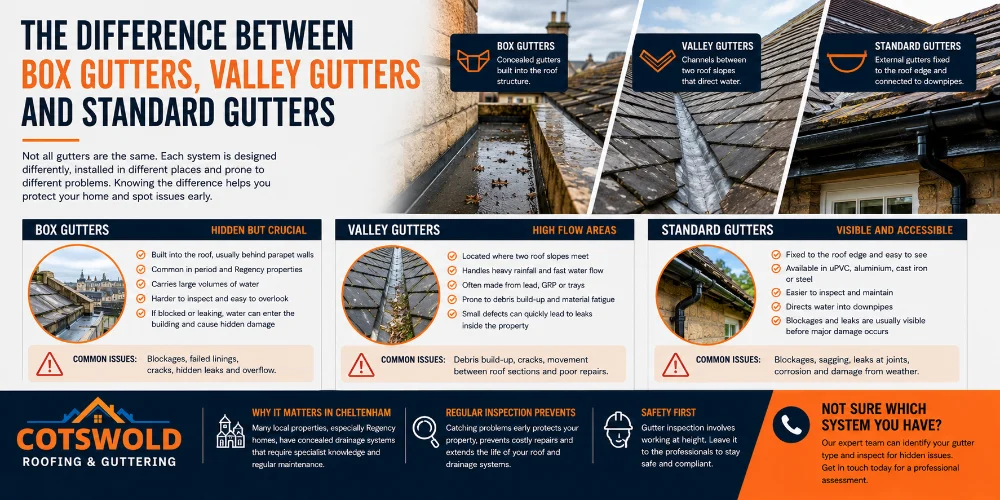
The Difference Between Box Gutters, Valley Gutters and Standard Gutters
Most homeowners think of gutters as the visible channels fixed to the edge of the roof.
However, not all gutter systems work in the same way.
Some gutters are visible and easy to inspect. Others are hidden within the roof structure and can develop serious problems before homeowners realise anything is wrong.
Understanding the differences between box gutters, valley gutters and standard gutters helps explain why some properties require more specialised maintenance and inspection.
This guide explains how each system works, where it is commonly found, and the warning signs homeowners should watch for.
What Are Standard Gutters?
Standard gutters are the most familiar type found on residential properties.
They sit along the roof edge and collect rainwater before directing it into downpipes.
Common profiles include:
- Half round
- Square line
- Ogee
- Deep flow
Standard gutters are usually manufactured from:
- uPVC
- Aluminium
- Cast iron
- Steel
Because they are visible, defects are often easier to identify.
Typical warning signs include:
- Overflow
- Sagging
- Leaking joints
- Standing water
For broader advice, see:
Common Gutter Problems and How to Avoid Them
What Are Box Gutters?
Box gutters are concealed drainage channels built into the roof structure.
Rather than hanging externally, they sit inside a formed channel and carry water internally.
Box gutters are commonly found on:
- Period buildings
- Commercial properties
- Regency homes
- Buildings with parapets
This design creates a cleaner external appearance but introduces additional maintenance challenges.
Because the gutter is hidden, homeowners may not notice problems until water appears internally.
Why Box Gutters Matter in Cheltenham
Cheltenham contains many Regency and historic properties.
These buildings often include parapets that hide roof edges from street level.
Behind those parapets, concealed box gutters may collect significant volumes of water.
When maintenance is delayed:
- Water may overflow internally
- Masonry may become saturated
- Roof structures can deteriorate
- Internal damp may develop
This is one reason specialist inspection becomes particularly important for older properties.
If your property includes heritage features, specialist assessment is often worthwhile.
Common Problems With Box Gutters
Box gutters experience different failures compared with standard systems.
Common issues include:
Blockages
Leaves and debris accumulate unnoticed.
Failed Waterproof Linings
Internal linings deteriorate over time.
Hidden Leaks
Water enters the building before external symptoms appear.
Overflow During Heavy Rain
Internal overflow can create significant damage.
These systems should never be assumed to be functioning correctly simply because they are hidden.
What Are Valley Gutters?
Valley gutters form where two roof slopes meet.
Rather than sitting at the roof edge, they channel water through internal roof junctions.
Valley gutters manage large volumes of water and therefore experience higher stress.
They may be formed using:
- Lead
- GRP
- Membrane systems
- Proprietary valley trays
Because valleys concentrate water flow, even small defects can create leaks.
Common Problems With Valley Gutters
Valley gutters often fail due to:
Debris Build-Up
Leaves and moss slow water movement.
Material Fatigue
Repeated wetting and drying affect durability.
Movement Between Roof Sections
Small movements can open pathways for water ingress.
Poor Historic Repairs
Temporary repairs frequently shorten lifespan.
How Homeowners Can Tell Which Gutter System They Have
Ask these questions:
Can You See the Gutters From Ground Level?
If yes, they are usually standard gutters.
Is There a Parapet Wall?
This may suggest concealed box gutters.
Does Water Enter Near Roof Junctions?
This may indicate valley gutter issues.
Is Damp Appearing Without Visible Overflow?
Hidden drainage systems may require investigation.
Which Gutter Type Requires the Most Maintenance?
All gutters require maintenance.
However:
Standard gutters are easiest to inspect.
Valley gutters require more specialist attention.
Box gutters usually require the most proactive maintenance because problems remain hidden.
This is especially important for older properties.
Why Professional Inspection Matters
Visual checks from ground level rarely reveal the full condition of concealed drainage systems.
Professional inspection helps identify:
- Hidden water retention
- Internal leaks
- Failed linings
- Early deterioration
Early intervention prevents much larger repair work.
Safety First
Gutter inspection often involves working at height.
The Health and Safety Executive identifies roof access as high risk.
Do not attempt to inspect concealed gutters yourself.
Professional inspection is safer and usually more effective.
What Should Homeowners Do Next?
Understanding your gutter system helps protect your property.
If your home includes parapets, concealed drainage or unusual roof layouts, routine inspection becomes even more important.
Identifying problems early almost always costs less than dealing with hidden water damage later.