

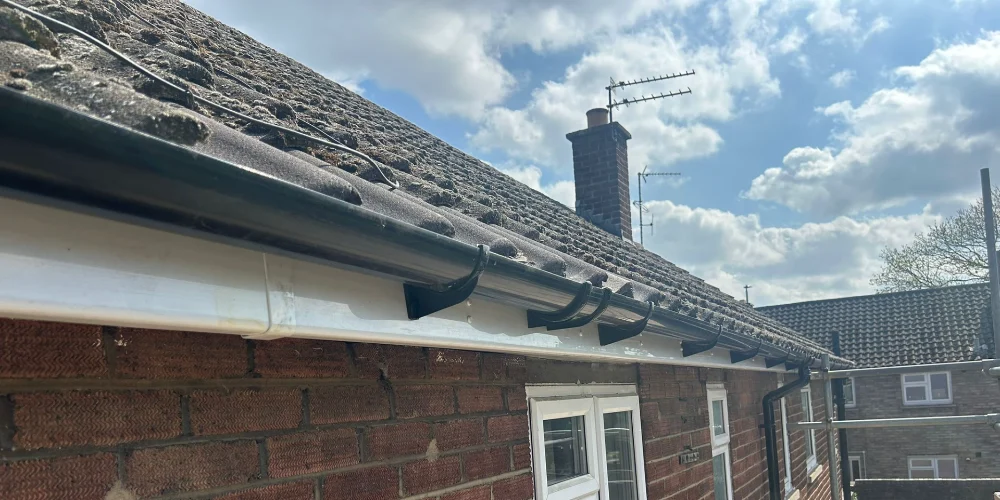
Gutters play an essential role in protecting your home by safely directing rainwater away from the roof, walls and foundations. When they begin to pull away from the house, however, they can no longer perform this important job effectively. Even a small gap between the gutter and the fascia can allow water to run down external walls, causing damp, timber decay and structural damage over time.
At Cotswold Roofing & Guttering, we regularly repair and replace guttering systems across Cheltenham and the surrounding areas. One of the most common problems we encounter is guttering that has gradually worked loose from the property. Fortunately, identifying the cause early can often prevent much more expensive repairs later.
Why Gutters Should Stay Firmly Attached
A correctly installed guttering system is securely fixed to the fascia boards using strong brackets spaced at regular intervals. These brackets support the weight of the gutter while maintaining the correct fall towards the downpipe.
When everything is working properly, rainwater flows efficiently through the system without placing excessive strain on the fixings. However, once brackets loosen or the fascia begins to deteriorate, sections of guttering can start to separate from the property.
The larger the gap becomes, the greater the risk of overflowing water and long-term damage.
Failed or Damaged Gutter Brackets
One of the most common reasons gutters pull away from a property is damaged gutter brackets.
Modern guttering relies on brackets to keep each section firmly in place. Over time, these fixings can weaken due to age, weather exposure or repeated movement during heavy rainfall.
Plastic brackets may become brittle after years of exposure to sunlight, while metal fixings can corrode if moisture reaches them.
Once one bracket fails, additional pressure is placed on the remaining supports, often causing further sections to loosen.
Replacing damaged brackets early can often prevent a much larger repair.
The Weight of Standing Water
Gutters are designed to carry flowing water rather than hold large volumes of standing water.
If the gutter has been installed without the correct fall, rainwater can collect in low spots instead of draining towards the downpipe. Standing water becomes surprisingly heavy, placing constant strain on the brackets and fascia boards.
Over time, this weight can pull the gutter away from the property, particularly after periods of prolonged rainfall.
Professional gutter realignment restores the correct fall and allows water to drain freely.
Blocked Gutters Become Much Heavier
Leaves, moss, twigs and general debris can quickly build up inside guttering.
Once blocked, the gutter begins holding both water and debris. This additional weight increases significantly during heavy rain and places unnecessary stress on the entire system.
Properties surrounded by mature trees are particularly susceptible, especially during autumn.
Regular gutter cleaning not only improves drainage but also reduces the weight acting on the brackets throughout the year.
Rotten Fascia Boards
The fascia boards provide the main fixing point for your guttering.
If timber fascias begin to rot due to prolonged exposure to moisture, the screws securing the brackets lose their grip. Eventually, the gutter starts pulling away as the timber weakens.
Many homeowners assume only the gutter requires attention when the real problem lies behind it.
During professional inspections, experienced roofers always assess the condition of the fascia boards before recommending repairs.
Replacing damaged fascias alongside the gutter often provides the most reliable long-term solution.
Poor Installation
Not every gutter problem develops because of age.
Unfortunately, poorly installed guttering can begin pulling away within just a few years if incorrect fixings or bracket spacing have been used.
Some installations use too few brackets, while others fail to anchor securely into sound timber.
Professional installers follow manufacturer recommendations for bracket spacing, ensuring the gutter remains properly supported throughout its entire length.
A correctly installed system should withstand years of normal weather conditions with only routine maintenance.
Storm Damage and High Winds
Gloucestershire regularly experiences periods of strong winds and heavy rainfall.
During storms, branches, debris and powerful gusts can place sudden pressure on guttering systems. Even if no obvious damage is visible, brackets may loosen slightly, or sections of the gutter may become misaligned.
Repeated storm events can gradually increase movement until the gutter eventually separates from the fascia.
Inspecting your guttering after severe weather can help identify problems before they worsen.
Ice and Freezing Weather
Although less common in recent years, freezing temperatures can still affect guttering.
If water trapped inside blocked gutters freezes, it expands considerably. The additional weight and pressure can force brackets away from the fascia or even crack sections of the gutter.
When the ice eventually melts, homeowners often notice that the gutter no longer sits flush against the property.
Keeping gutters clear before winter helps minimise this risk.
Natural Expansion and Contraction
Every guttering system expands and contracts slightly as temperatures change throughout the year.
Quality gutter installations are designed to accommodate this movement. However, older systems with worn brackets or deteriorating joints may gradually work loose after years of seasonal expansion and contraction.
While this process happens slowly, it can eventually contribute to gutters pulling away from the house.
Routine inspections allow small movements to be corrected before they become significant.
What Happens If You Ignore the Problem?
Loose guttering should never be ignored.
As the gap increases, more rainwater escapes behind the gutter instead of entering it. This can lead to damp walls, stained brickwork, rotten fascias, damaged soffits and even internal water ingress.
If left untreated, continuous moisture can also weaken mortar joints and contribute to mould growth inside the property.
Repairing a loose bracket is far less expensive than repairing extensive water damage.
Can Gutters Be Repaired?
In many cases, yes.
If the gutter itself remains in good condition, replacing brackets, realigning sections or repairing the fascia may fully resolve the problem.
However, older systems with multiple defects may benefit from complete replacement. During an inspection, an experienced contractor will assess the condition of the entire guttering system before recommending the most cost-effective solution.
The aim should always be to provide a repair that lasts rather than a temporary fix.
Professional Gutter Repairs in Cheltenham
At Cotswold Roofing & Guttering, we provide expert gutter inspections, repairs and replacements throughout Cheltenham and the surrounding areas. Whether your guttering has started to sag, brackets have failed, fascia boards have deteriorated, or storm damage has affected your roofline, our experienced team will identify the cause and recommend the most appropriate solution.
We believe in carrying out repairs that protect your property for the long term, helping you avoid unnecessary expense and future problems.
Don’t Ignore Loose Guttering
If you’ve noticed your gutters pulling away from your property, don’t wait until water damage develops. Early repairs are often straightforward, affordable and can prevent much more extensive work in the future.
Contact Cotswold Roofing & Guttering today to arrange a professional inspection and let our experienced team restore your guttering system to full working order.