

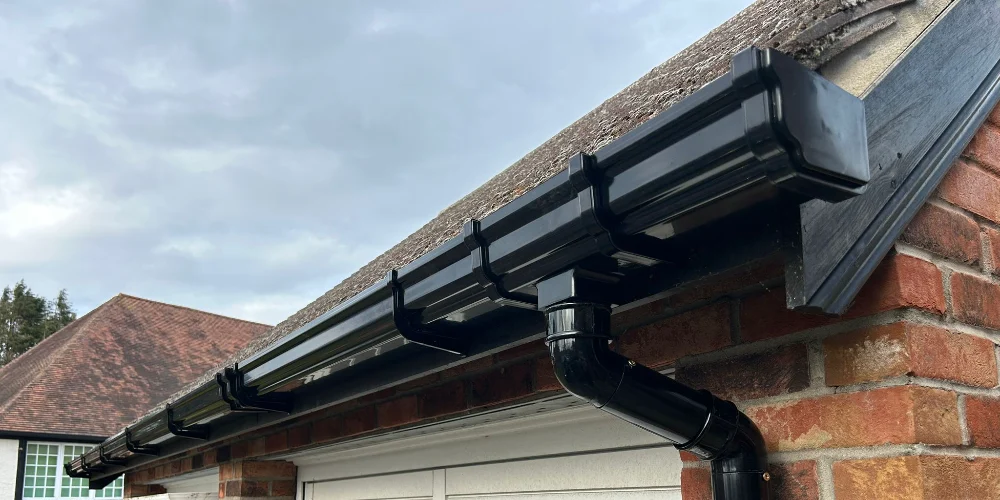
During heavy rain, your guttering should collect water from your roof and channel it safely towards the downpipes. However, many homeowners notice water pouring down the wall behind the gutter instead of flowing into it. Although it may appear to be a minor inconvenience, this problem can quickly lead to damp walls, damaged brickwork, rotten fascias and costly repairs.
At Cotswold Roofing & Guttering, we regularly investigate this issue across Cheltenham and the surrounding areas. In many cases, the cause is not immediately obvious, and simply cleaning the gutters does not solve the problem. Understanding why water runs behind your gutters can help you protect your home before more serious damage occurs.
How Your Guttering Should Work
A correctly installed guttering system is designed to catch rainwater as it leaves the roof. Water should flow smoothly from the roof covering into the gutter channel before travelling through the downpipes and into the property’s drainage system.
Every component plays an important role. The roof edge, fascia boards, gutter brackets, gutter alignment and downpipes all need to work together. If just one part fails, rainwater may escape behind the gutter instead of entering it.
Because many guttering problems develop gradually, homeowners often do not notice anything is wrong until damp patches or staining begin to appear on external walls.
Incorrect Gutter Positioning
One of the most common causes of water running behind gutters is poor positioning.
If the gutter sits too low beneath the roofline, rainwater can overshoot the front edge during heavy rainfall. Equally, if the gutter has been installed too far away from the roof edge, water may fall directly between the roof and the back of the gutter.
Even small installation errors can have a significant effect during periods of heavy rain.
Professional installers carefully position gutters so they sit directly beneath the roof’s drip line while maintaining the correct fall towards the downpipe.
Blocked Gutters Causing Overflow
Leaves, moss, twigs and other debris frequently collect inside guttering systems.
As the blockage grows, water can no longer flow freely towards the outlet. Instead, it begins to build up until it eventually spills over. Depending on where the blockage occurs, this overflow may run over the front of the gutter or escape behind it against the fascia board.
This is particularly common after autumn, when falling leaves accumulate quickly, or after roof moss begins to wash into the gutters following periods of wet weather.
Regular gutter cleaning significantly reduces the risk of overflow and helps identify developing issues before they become expensive repairs.
Blocked Downpipes
Sometimes the gutters themselves appear clean while the problem actually lies inside the downpipe.
When a downpipe becomes blocked, rainwater has nowhere to drain. The gutter fills with standing water before eventually overflowing behind the system.
Because the blockage is hidden inside the pipe, many homeowners mistakenly believe their gutters need replacing when the solution may simply involve clearing the obstruction.
Professional inspections normally include checking every downpipe as well as the gutter channels themselves.
Damaged or Rotten Fascia Boards
Your fascia boards provide the fixing point for your guttering system. They also protect the roof structure from moisture.
If timber fascias begin to rot, the gutter brackets can loosen or pull away from the property. This changes the angle of the gutter and creates gaps where water can pass behind the system.
Even modern uPVC fascias can conceal underlying timber decay if moisture has been entering the roofline for some time.
During gutter inspections, experienced roofers always examine the condition of the fascias rather than focusing solely on the gutter itself.
Missing or Damaged Roof Drip Edge
Many homeowners have never heard of a roof drip edge, yet it plays an important role in directing rainwater into the gutter.
The drip edge is a metal flashing installed beneath the edge of the roof covering. It guides water away from the fascia and into the gutter channel.
If this component is missing, damaged or incorrectly installed, rainwater can cling to the underside of the roof due to surface tension. Instead of falling cleanly into the gutter, it travels backwards and runs behind the guttering.
Although this problem is relatively simple to correct, it is often overlooked because it cannot easily be seen from ground level.
Guttering That Has Started to Sag
Over time, gutter brackets can weaken or become damaged.
Heavy rain, accumulated debris and the weight of standing water all place additional stress on the brackets. Eventually, sections of guttering may begin to sag.
Once the gutter loses its correct alignment, water collects in low spots rather than flowing towards the outlet. As water builds up, it eventually spills over the back edge, soaking the fascia boards and walls below.
Replacing damaged brackets and realigning the gutter usually restores proper water flow.
Poor Gutter Falls
Every gutter installation requires a slight gradient, known as the fall.
Although the angle is barely noticeable, it ensures rainwater flows efficiently towards the downpipe. If sections of gutter have no fall, or if the fall has been installed incorrectly, water remains trapped inside the system.
Standing water places additional strain on joints, brackets and seals while increasing the likelihood of overflow during heavy rainfall.
Professional installers use specialist equipment to achieve the correct fall across the entire gutter run.
Heavy Rainfall Exceeding Gutter Capacity
Not every overflow indicates a fault.
Some older properties have guttering that was installed decades ago using smaller profiles than those commonly fitted today. During particularly intense rainfall, these systems may simply struggle to cope with the volume of water leaving the roof.
Where this occurs regularly, upgrading to a larger capacity gutter profile may provide a permanent solution.
A professional survey can determine whether the existing system is correctly sized for your property’s roof area.
Why Ignoring the Problem Can Become Expensive
Water repeatedly running behind gutters should never be ignored.
Persistent moisture can lead to rotten fascias, damaged soffits, penetrating damp, mould growth, stained brickwork and weakened pointing. In colder weather, trapped moisture can freeze and expand, accelerating deterioration.
Over time, a relatively minor gutter fault can develop into a much larger roofing repair involving structural timber, insulation and internal decoration.
Addressing the problem early is almost always the most cost-effective option.
How Cotswold Roofing & Guttering Diagnoses the Cause
Rather than making assumptions, our experienced team carries out a thorough inspection of the entire roofline.
We assess the gutter alignment, bracket condition, joints, downpipes, fascia boards and roof edge to identify the exact cause of the problem. Once we understand why water is escaping behind the gutter, we recommend the most appropriate repair rather than suggesting unnecessary replacement work.
Our aim is always to provide an honest, long-lasting solution that protects your property for years to come.
Protect Your Home Before Minor Problems Become Major Repairs
If you have noticed water running behind your gutters, overflowing during heavy rain or damp patches appearing beneath your roofline, it is worth arranging a professional inspection before the damage becomes more extensive.
At Cotswold Roofing & Guttering, we provide expert gutter repairs, gutter replacement, fascia and soffit repairs, roofline inspections and preventative maintenance throughout Cheltenham and the surrounding areas. Whether the problem is caused by poor alignment, blocked downpipes, damaged fascias or ageing gutter components, our experienced team can identify the cause and provide a reliable, long-lasting repair.
Contact Cotswold Roofing & Guttering today to arrange a professional gutter inspection and keep your property protected throughout every season.