

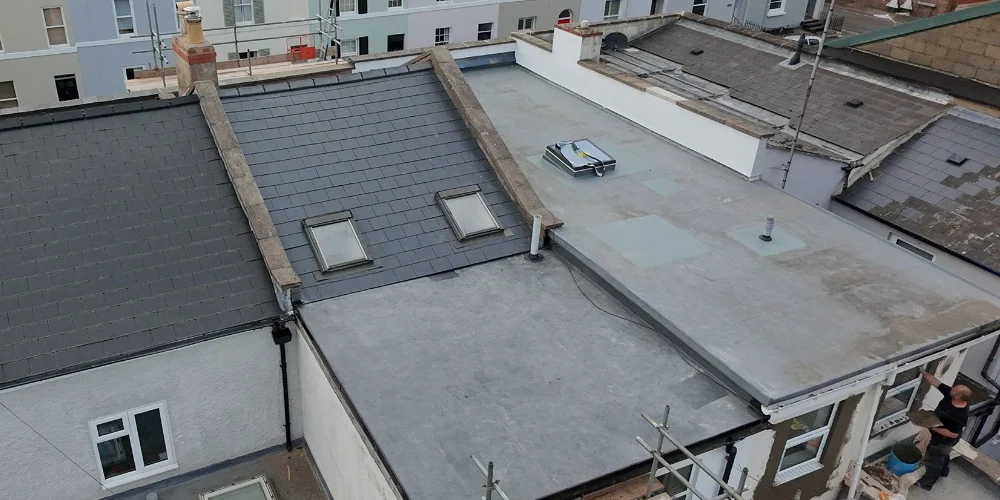
How Long Do Flat Roofs Last?
How long do flat roofs last? It is one of the most common questions homeowners in Cheltenham ask, especially when their existing flat roof starts showing signs of age. The answer depends on the material, the quality of the original installation, and how well the roof has been maintained over the years. This guide gives you realistic lifespans based on what we see on properties across Cheltenham and Gloucestershire every day.
Knowing how long flat roofs last helps you plan ahead. If your flat roof is approaching the end of its expected lifespan, you can budget for a replacement before leaks start causing damage to the structure below.
Traditional Felt: 10 to 15 Years
Traditional three-layer bitumen felt is the most common flat roof material on older extensions, garages, and outbuildings across the area. A well-installed felt roof typically lasts 10 to 15 years before it starts to deteriorate. Over time, the felt dries out and becomes brittle. As a result, cracks appear, and water finds its way through.
Cold winters accelerate this process. Felt that has lost its flexibility cracks more easily when temperatures drop below freezing. If your felt roof is more than 12 years old and you can see blistering, cracking, or areas where the felt has lifted, it is approaching the end of its useful life.
Torch-On Felt: 15 to 20 Years
Modern torch-on felt is a significant improvement on traditional felt. The modified bitumen membrane is thicker, more flexible, and more resistant to UV and weathering. A quality torch-on system applied in two or three layers typically lasts 15 to 20 years.
Torch-on felt holds up well in Cheltenham’s variable climate. However, it still degrades over time. The surface becomes rough and granular as the top layer wears, and seams can eventually fail. Therefore, regular inspection and prompt repair of minor damage help you get the full lifespan from a torch-on roof.
EPDM Rubber: 25 to 30 Years
EPDM rubber membranes are one of the longest-lasting flat roof materials available today. A properly installed EPDM roof can last 25 to 30 years or more. Some manufacturers offer material guarantees of up to 20 years, which reflects their confidence in the product.
EPDM stays flexible throughout its life, which means it does not crack in cold weather or become brittle with age. In addition, it resists UV radiation and handles significant temperature swings without degrading. For flat roofs on extensions and dormers across Cheltenham, EPDM offers excellent long-term value.
Fibreglass (GRP): 20 to 25 Years
Fibreglass flat roofs create a seamless, rigid shell with no joints or seams. A well-installed GRP roof typically lasts 20 to 25 years. The material is hard-wearing, walkable, and requires very little ongoing maintenance.
The main risk with fibreglass is cracking. If the underlying timber deck flexes due to thermal movement or structural settlement, the rigid GRP layer can develop hairline cracks. Consequently, this is more common on older properties where the deck timbers may not be perfectly stable. When installed correctly on a solid substrate, however, GRP provides decades of reliable protection.
What Shortens a Flat Roof’s Life?
Several factors can reduce the lifespan of any flat roof, regardless of which material you choose. Understanding these helps you avoid the most common causes of premature failure.
Poor Installation
This is the biggest cause of early flat roof failure. If seams are not properly bonded, drainage falls are insufficient, or the substrate is not prepared correctly, problems appear much sooner than expected. A cheap installation often costs more in the long run because repairs and early replacement eat into any initial savings.
Blocked Drainage
If the gutters or outlets that drain your flat roof become blocked, water pools on the surface and accelerates deterioration. Tree-lined streets across Cheltenham are especially prone to this during autumn. Keeping drainage clear is one of the simplest and cheapest ways to extend your flat roof’s life.
Foot Traffic and Debris
Walking on a flat roof without a protective walkway damages the membrane over time. Similarly, accumulated leaves, branches, and moss trap moisture against the surface. This moisture speeds up degradation and creates conditions for algae and fungal growth. If you need to access your flat roof regularly, consider having a walkway installed to protect the covering.
Lack of Maintenance
Flat roofs need regular attention. A small lifted seam or a minor crack in the flashing can let in water for months before you notice damp inside. By that point, the timber deck underneath may have started to rot. Annual inspections catch these issues early, when they are cheap to fix rather than expensive to replace.
How to Extend Your Flat Roof’s Life
The best thing you can do for your flat roof is have it inspected by a professional at least once a year. A trained eye spots early signs of wear, lifted seams, and drainage problems before they turn into active leaks. Regular roof maintenance is always cheaper than emergency repairs.
Between professional inspections, there are simple steps you can take yourself. Keep the surface clear of leaves and debris. Check that drainage outlets are not blocked after heavy rainfall. Trim back overhanging branches that drop leaves onto the roof. Avoid walking on the surface unless necessary.
According to the National Federation of Roofing Contractors, routine maintenance is the single most effective way to maximise the lifespan of any flat roof system.
How Long Do Flat Roofs Last Without Maintenance?
Without any maintenance, expect to lose several years from the lifespan figures above. A felt roof that could last 15 years with care might fail after 8 to 10 years if drainage is left blocked and minor damage goes unrepaired. Even EPDM and fibreglass, which are inherently durable, suffer when ponding water sits on their surface for years without attention.
The cost of an annual inspection is a fraction of the cost of a premature replacement. It is one of the best investments you can make in your property.
Is It Time to Replace Your Flat Roof?
If your flat roof is approaching the end of its expected lifespan, or you are dealing with recurring leaks despite repairs, replacement is likely the more cost-effective option. We carry out flat roof repairs and replacements across Cheltenham and Gloucestershire using EPDM, torch-on felt, and fibreglass. We also check the condition of your fascias and soffits during the survey, as roofline issues often coincide with flat roof deterioration.
Now you know how long flat roofs last, you can plan ahead with confidence. Call us on 01242 361 626 or get in touch through our contact form for a free, no-obligation assessment of your flat roof.
Related Articles
- What Everyone Should Know About Flat Roof Repairs
- Why Is My Flat Roof Leaking? Common Causes and What to Do
- EPDM vs Felt vs Fibreglass: Which Flat Roof Material Is Best?
Cotswold Roofing & Guttering offers a full range of our roofing services across Cheltenham and Gloucestershire. The right maintenance routine can add years to any flat roof. Explore our essential roof maintenance tips to prevent costly repairs. See our customer reviews.
For a broader overview of this topic, read our complete guide to roof maintenance in Cheltenham.