

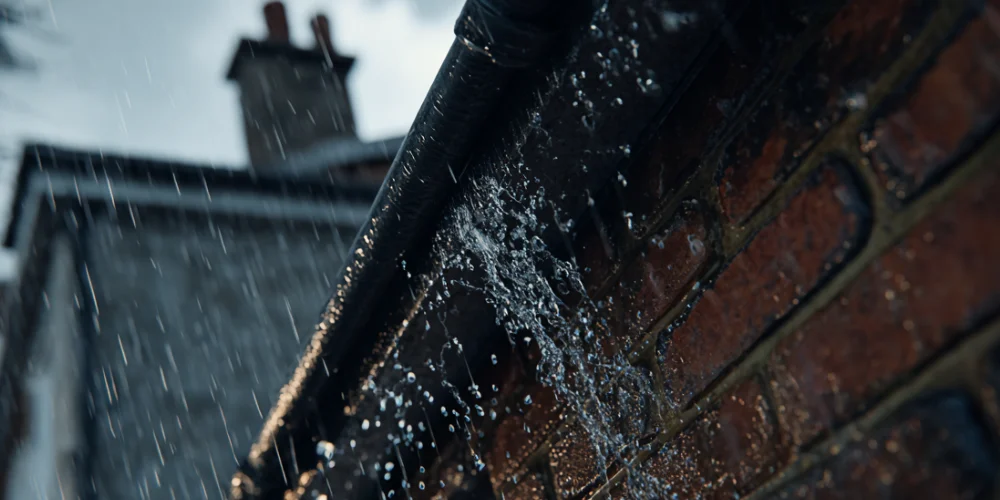
Winter places the most significant strain on your home, and your guttering system often takes the brunt of it. Freezing temperatures, heavy rainfall, snow, ice, storms, and falling debris all combine to create the perfect conditions for gutter damage. Many homeowners only realise there is a problem when water begins to overflow, leak into walls, or cause visible damp and staining.
Understanding how winter weather damages gutters is essential to protecting your property, avoiding costly repairs, and maintaining a strong kerb appeal. In this guide, we explore the most common ways winter affects guttering systems, the warning signs to look out for, and what you can do to prevent long-term damage to your home.
Why Gutters Are More Vulnerable in Winter
Gutters function as your home’s primary drainage system. Their role is vital but straightforward. They collect rainwater from the roof and safely direct it away from the walls, foundations, and landscaping. During winter, this system is constantly under pressure from cold weather, heavy rainfall, freezing conditions, and debris buildup.
Unlike summer, when gutters mainly deal with light showers, winter introduces sudden temperature drops that cause water to freeze and expand. Combined with storms and leaf fall, this puts significant mechanical stress on gutter joints, brackets, and downpipes.
Even strong gutter systems can suffer damage if they are already blocked, poorly installed, or ageing. Winter speeds up the failure process.
How Ice and Freezing Temperatures Damage Gutters
One of the most destructive winter forces is ice. When water freezes, it expands. This simple physical reaction causes severe structural stress inside guttering systems.
If water becomes trapped inside a blocked or poorly aligned gutter, freezing temperatures can force the guttering to swell, crack, or split. This is especially common in older uPVC systems where the plastic has become brittle over time.
Repeated freeze-thaw cycles also weaken gutter joints. Each time the temperature rises slightly, the ice melts and shifts. When it refreezes, joints loosen further. Over the course of a winter, this can turn a minor joint weakness into a full leak or separation.
Metal systems are not immune. Cast iron, steel, aluminium, zinc, and copper can all suffer when ice builds up inside them. While the metal may not crack easily, the weight of ice can pull gutters away from brackets and distort their alignment.
The Impact of Snow and Ice Weight on Gutters
Snow may look light and soft when it falls, but when it’s loaded onto a guttering system, it can create significant weight. When snow melts slightly and refreezes, it becomes compacted ice, which weighs far more than loose snowfall.
This added load places strain on gutter brackets, fascia fixings, and downpipes. Over time, brackets bend, fixings loosen, and gutters begin to sag. Once a gutter starts to sag, water no longer drains correctly and begins to pool in low spots.
Pooling water creates ideal conditions for deeper freezing, worsening the damage. In severe cases, entire gutter runs can pull away from the fascia board after heavy snowfall followed by freezing temperatures.
Heavy Winter Rain and Storm Damage
Winter rain is often heavier, more prolonged, and driven by strong winds. During storms, water hits the roof at high force and rapidly floods into the guttering system.
If gutters are partially blocked with leaves, moss, silt, or other debris, they cannot handle the sudden volume of water. Overflow becomes inevitable. When water spills over the edge of a gutter, it runs directly down external brickwork, saturating walls and window frames.
Over time, this leads to damp ingress, staining, mould growth, and, in some cases, internal plaster damage. Overflowing water also erodes the ground below, undermining paths, drives, and foundations.
Strong winds add another level of risk. Gusts can lift poorly secured gutters, dislodge brackets, or cause debris to smash into the guttering system at speed. Downpipes often bear the brunt of wind damage during winter storms.
Falling Debris and Blockages in Winter
Autumn is bad enough for fallen leaves, but winter brings its own debris problems. Storms shake loose dead branches, roof moss, tile grit, and bird nesting material.
All of this collects inside gutters and downpipes. Once blockages form, water backs up quickly. When that trapped water freezes overnight, the pressure inside the gutter increases dramatically.
Blocked downpipes are particularly dangerous during winter. While the gutter may appear fine from the ground, water has nowhere to go. That water freezes inside the pipe, expanding and cracking joints or forcing the pipe away from the wall.
Hidden blockages are one of the main reasons winter gutter damage often goes unnoticed until spring.
How Winter Affects Gutter Joints and Seals
Most gutter systems rely on rubber seals or joint connectors to keep everything watertight. Winter conditions are harsh on these components.
Cold temperatures cause rubber seals to harden and shrink. As materials contract, small gaps develop at joints. When rainwater enters these gaps, it freezes and expands, forcing the joint to open further.
This process repeats itself every cold night. Over time, once tight joints become persistent leak points. These leaks often drip directly onto fascia boards and brickwork, accelerating rot and damp penetration.
Once joint failure begins, it rarely stops without professional repair or replacement.
The Effect of Winter on Fascia Boards and Rooflines
Your gutters are fixed directly into your roofline, usually through fascia boards. When winter gutter problems occur, they often create secondary damage to the rest of the roof edge.
Overflowing gutters soak timber fascias, which then swell, soften, and rot. In freezing conditions, water within the timber expands, causing splitting. Paint peels, fixings loosen, and the fascia begins to fail structurally.
Once the fascia board weakens, the gutter system loses its anchor point. Sagging becomes worse, and the entire drainage system is compromised.
This type of damage is both expensive and disruptive to repair because it often requires roofline replacement alongside new guttering.
Hidden Internal Damage Caused by Winter Gutter Issues
One of the most dangerous aspects of winter gutter damage is how long it can remain hidden.
Moisture that penetrates walls from overflowing gutters can travel internally through brickwork and insulation before appearing inside the home. By the time visible signs such as bubbling paint, damp patches, or mould appear, the damage is already advanced.
Frozen downpipes can force water into cavity walls. Over time, this increases heat loss, raises heating bills, and leads to long-term structural deterioration. Timber roof components in the eaves are also vulnerable to prolonged moisture exposure caused by winter gutter failures.
These hidden problems often cost far more to fix than the initial gutter issue would have.
Common Signs Your Gutters Have Suffered Winter Damage
Many homeowners miss the early warning signs until spring. Some of the most common indicators of winter gutter damage include water overflowing during rainfall, visible sagging along the gutter run, dripping joints, and staining on external walls.
You may also notice downpipes pulling away from the building, plant growth inside gutters, peeling paint on fascias, or puddles forming at the base of walls. All of these are signs that winter conditions have compromised your drainage system.
Inside the home, damp patches near ceilings, mould on upper walls, and musty smells can all be traced back to winter gutter failures.
Why Winter Gutter Damage Often Leads to Emergency Repairs
Gutter problems tend to escalate quickly in winter. What begins as a minor blockage can become a complete structural failure after a single severe storm or cold snap.
When frozen gutters crack, split, or pull free from fascias, water is immediately directed toward the building rather than away from it. This creates an urgent situation where active damage begins to occur.
Emergency gutter repairs during winter are far more expensive than preventative maintenance completed beforehand. Access is more difficult, weather windows are shorter, and damage has often progressed beyond simple cleaning or resealing.
The Role of Preventive Maintenance Before Winter
The most effective way to reduce winter gutter damage is to perform preventive maintenance in late summer or early autumn.
Clearing leaves, moss, and debris ensures that rainwater can flow freely through the system. Checking bracket security prevents sagging under snow loads. Inspecting joints allows small leaks to be sealed before freeze-thaw cycles begin.
Downpipes should always be tested to ensure they are running freely. Any slow drainage indicates a partial blockage that will worsen once freezing conditions set in.
Professional inspections often reveal issues that are not visible from ground level. These early interventions save homeowners from expensive winter emergencies.
Why Professional Gutter Inspections Matter in Winter
While some homeowners attempt DIY gutter cleaning, winter inspections are best carried out by trained professionals.
Access risks are significantly higher in wet, icy conditions. Professionals use safe access equipment and conduct comprehensive structural checks of brackets, joints, seals, and pipe connections.
A professional inspection also identifies roof-edge issues caused by previous gutter failures, such as early fascia rot, slipped tiles near the eaves, and water tracking behind the gutter system.
Addressing these issues before winter arrives dramatically reduces the chance of cold weather causing severe damage.
How Modern Guttering Systems Perform Better in Winter
Older gutter systems often struggle to cope with modern weather patterns. Increased rainfall intensity and more frequent freeze-thaw cycles place greater demands on drainage systems.
Modern deep flow guttering, seamless aluminium systems, and improved joint designs allow water to discharge more effectively during storms. These systems are better suited to modern rainfall volumes and provide greater resistance against seasonal stress.
Upgrading outdated guttering is often one of the most cost-effective property improvements a homeowner can make.
The Long-Term Cost of Ignoring Winter Gutter Damage
Putting off gutter repairs after winter almost always increases the final cost.
Small leaks lead to fascia rot. A fascia rot leads to a complete roofline replacement. Blocked downpipes lead to damp walls and internal plaster damage. Cracked gutters increase the risk of subsidence by saturating foundations.
Each of these repairs costs far more than simple early maintenance. Insurance claims for water damage are also more likely to be rejected when gutters have not been adequately maintained.
Protecting your gutter system protects the entire structure of your home.
How Cotswold Roofing & Guttering Helps Protect Homes in Winter
At Cotswold Roofing & Guttering, we see firsthand how winter weather damages gutters across Cheltenham and the Cotswolds. Our team provides professional gutter cleaning, repairs, and replacements tailored to local weather conditions and property types.
From period homes with cast-iron systems to modern properties with deep-flow uPVC or aluminium guttering, every system requires the right approach. Regular inspections, seasonal maintenance, and timely repairs keep homes protected during the most demanding months of the year.
Protect Your Gutters Before Winter Causes Serious Damage
Winter is, without doubt, the most punishing season for your guttering system. Ice formation, snow load, freezing temperatures, storms, high rainfall, and falling debris all work together to stress gutter structures and joints.
Understanding how winter weather damages gutters equips homeowners to act early. Prevention through maintenance is always cheaper than a cure. With the proper care, your gutters can continue to protect your home for years to come without disruption.
If your gutters have been damaged this winter, or if you want a professional inspection before the next cold season, contact Cotswold Roofing & Guttering today for expert advice and reliable service across Cheltenham and the Cotswolds.
Related Articles
- From Overflow to Subsidence: The Long Journey of a Gutter Leak
- How Small Gutter Issues Turn Into Big Structural Problems
- Why Regular Gutter Maintenance Reduces Storm-Related Roof Problems
Winter puts enormous pressure on your guttering system. Cotswold Roofing & Guttering provides guttering services to repair and protect your gutters through the coldest months. Cold weather affects roofs just as much as gutters. Read our advice on how to spot storm damage that is not always obvious. We regularly repair winter gutter damage in Prestbury and across Cheltenham. See our 164+ customer reviews.
This topic is covered in more depth in The Complete Guide to Guttering in Cheltenham.