

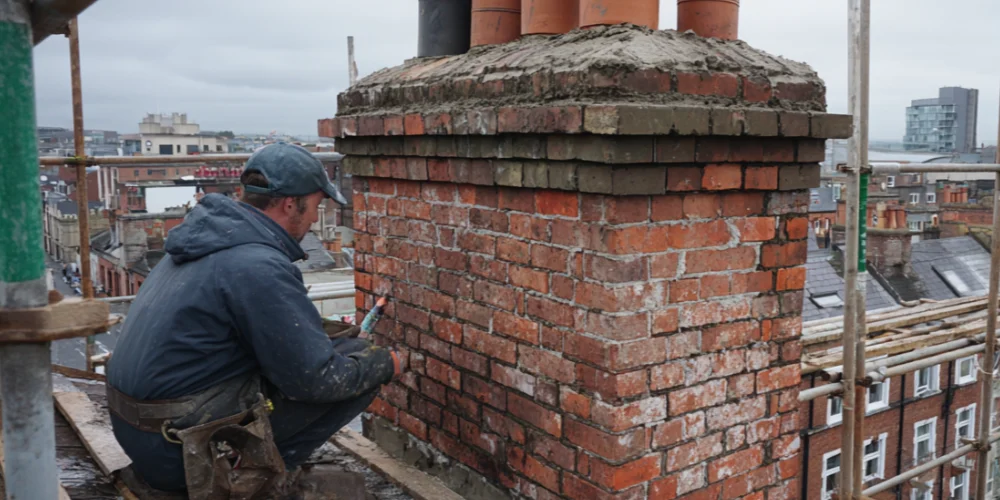
If you are asking, Why Is Water Dripping Down My Chimney Breast?, you are right to take it seriously. Although a damp patch may look minor at first, water appearing on a chimney breast almost always signals a roofing defect. In Cheltenham and across the Cotswolds, this issue is particularly common due to older housing stock and persistent seasonal rainfall.
However, the visible stain inside your home rarely tells the full story. In most cases, the real problem sits above roof level, where flashing, mortar, or brickwork has begun to fail. Therefore, identifying the source early prevents further structural damage and higher repair costs.
This guide explains what causes chimney breast leaks, how serious they can become, what checks you can safely carry out, and when you should call a professional roofer in Cheltenham.
Why Is Water Dripping Down My Chimney Breast After Rain?
When water drips down a chimney breast after rainfall, external water penetration is almost always responsible. While condensation can cause light dampness, active dripping or spreading stains usually indicate that rainwater has entered the chimney structure.
In Cheltenham, properties, especially Victorian and Edwardian homes, often have chimney stacks exposed on roof ridges. Consequently, they take the full force of wind-driven rain. Over time, materials deteriorate, and water finds entry points.
The most common causes include:
• Failing lead flashing
• Deteriorated chimney pointing
• Cracked chimney crown or flaunching
• Porous brickwork
• Missing or damaged chimney cowls
Each issue allows rain to travel internally before appearing on your chimney breast.
Is Chimney Flashing Causing Water to Come Through My Chimney?
Chimney flashing problems are among the leading causes of water ingress around chimney breasts.
Lead flashing creates a watertight seal between the chimney stack and roof tiles. However, because the chimney and roof expand at different rates, movement gradually stresses the flashing.
Over time, flashing may:
Lift away from mortar joints
Split along folds
Crack due to age
Become incorrectly secured
As a result, rainwater runs behind the lead and into the roof structure. Eventually, moisture travels down the chimney masonry and appears inside.
In Cheltenham, we frequently see poorly installed flashing on older properties. Although temporary sealants may delay leaks, they rarely solve the issue permanently. Instead, proper stepped lead installation provides long-term protection.
Can Damaged Chimney Pointing Cause a Damp Chimney Breast?
Yes, and this often surprises homeowners.
Mortar joints protect brickwork from water penetration. However, frost, wind and heavy rainfall gradually erode mortar. Once joints weaken, rainwater absorbs into the chimney stack.
Because brickwork acts like a sponge, moisture may not appear on the inside straight away. Instead, it travels downward before reaching internal plaster.
Across the Cotswolds, older lime mortar frequently deteriorates after decades of exposure. Consequently, chimney pointing repair in Cheltenham remains one of the most common maintenance tasks for period properties.
Repointing restores structural integrity and prevents further moisture penetration.
Why Does My Chimney Leak Only During Heavy or Windy Rain?
If your chimney breast only becomes damp during storms, flashing or tile junction failure is likely.
Wind-driven rain forces water under tiles, causing it to run sideways. Therefore, even small gaps become significant during bad weather.
In contrast, light rainfall may not trigger visible leaks. However, the defect still exists.
Because Cheltenham experiences strong gusts during seasonal storms, these conditions often reveal underlying weaknesses.
Could Condensation Be the Cause Instead?
Although condensation affects unused flues, it rarely causes active dripping.
Condensation typically:
Appears gradually
Occurs during colder months
Creates surface dampness rather than flowing water
In contrast, water that worsens after rainfall almost always originates externally.
If you notice dripping shortly after rain, external water ingress remains the most probable explanation.
How Serious Is a Small Chimney Leak?
Even small leaks deserve attention.
Initially, you may only see a faint stain. However, water rarely stops on its own. Instead, it spreads through:
Roof timbers
Battens
Loft insulation
Ceiling plaster
Because timber rot develops quietly, structural damage can occur before visible signs worsen.
Furthermore, damp chimney breasts encourage mould growth, which affects indoor air quality.
Therefore, although the issue may seem cosmetic, the long-term risks justify prompt inspection.
How Do Roofers Diagnose Chimney Leaks in Cheltenham?
Professional roof inspections follow a systematic approach.
First, roofers inspect external flashing and mortar joints. Next, they check tile alignment around the chimney junction. Meanwhile, they assess the chimney crown and flaunching for cracks.
Internally, they examine the loft space for damp rafters or water trails.
Because water can travel sideways before appearing inside, experienced roofers trace the highest potential entry point rather than focusing only on the damp patch.
This method ensures accurate diagnosis and prevents repeated repair attempts.
What Repairs Fix Water Dripping Down a Chimney Breast?
The repair depends on the root cause. However, most chimney leak repairs fall into one of the following categories.
Lead flashing replacement restores a watertight seal. Proper installation involves cutting stepped chases into mortar joints and allowing for thermal movement.
Chimney repointing removes deteriorated mortar and replaces it with suitable material. For older Cheltenham properties, lime mortar often provides better compatibility than cement-based mixes.
Chimney crown repair seals cracks at the top of the stack. Without this protection, water enters directly from above.
Chimney cowl installation prevents rainfall from entering unused flues. In addition, cowls deter birds and debris.
Although patch repairs may appear cheaper initially, comprehensive repairs provide longer-lasting results.
How Much Does Chimney Leak Repair Cost in Cheltenham?
Costs vary depending on access requirements and defect severity.
Minor flashing repairs generally cost less than full chimney rebuilds. However, ignoring leaks increases long-term expense.
For example, early flashing replacement may prevent:
Ceiling replastering
Timber replacement
Insulation damage
Internal redecoration
Therefore, prompt action often proves more cost-effective than delay.
Can I Ignore Water Coming Through My Chimney?
Many homeowners hope a leak will stop once the rainfall reduces. Unfortunately, this rarely happens.
Instead, repeated wetting cycles worsen mortar erosion and brick saturation. Consequently, each storm increases internal damage.
Because chimney stacks sit exposed above roof level, they deteriorate faster than other areas.
Therefore, ignoring even minor chimney leaks risks structural complications later.
Why Are Chimney Leaks Common in the Cotswolds?
The Cotswolds experience consistent rainfall and seasonal storms. Additionally, many properties feature older brickwork and clay roof tiles.
While these materials provide character, they require maintenance.
Freeze-thaw cycles expand cracks in mortar joints. Meanwhile, wind lifts tiles slightly around chimney junctions. As a result, vulnerabilities develop over time.
Regular roof inspections help detect small issues before they escalate.
When Should Cheltenham Homeowners Arrange an Inspection?
You should contact a roofing professional if:
• Water actively drips
• Stains spread after rain
• Mortar joints appear cracked
• Flashing looks lifted
• You smell pa ersistent damp
An early inspection limits the repair scope and protects property value.
How Does a Chimney Leak Affect Property Value?
Surveyors frequently flag damp chimney breasts during property sales. Even minor staining raises concerns about structural integrity.
Because buyers often overestimate repair costs, unresolved leaks can delay transactions or reduce offers.
Addressing chimney flashing problems before listing a property provides reassurance and improves buyer confidence.
What Should You Do If You Notice Damp Around Your Chimney Breast?
First, monitor whether the stain worsens after rainfall. Next, check your loft space for damp timber near the chimney.
However, avoid climbing onto the roof yourself. Instead, arrange a professional inspection to identify the precise cause.
At Cotswold Roofing & Guttering, we inspect and repair chimney leaks across Cheltenham and the wider Cotswolds. Because we understand local building styles and weather conditions, we diagnose problems accurately and provide long-term solutions.
If you are still asking, “Why Is Water Dripping Down My Chimney Breast?” the safest approach is to act early.
Water rarely disappears without repair. However, prompt attention prevents structural damage, protects your home’s value and restores peace of mind.
Related Articles
- Should I Be Worried About a Small Roof Leak?
- Is Chimney Flashing Causing My Roof Leak?
- Top 10 Causes of Roof Leaks and How to Prevent Them
Water dripping down a chimney breast is a problem that needs prompt attention. Cotswold Roofing & Guttering offers a complete range of roofing services to resolve chimney and flashing issues. Chimney problems are sometimes connected to a lack of regular upkeep, so read our guide on signs your roof needs maintenance before winter. Get in touch for a free inspection.
For the full picture, see the full guide to roof repairs in Cheltenham.