

Guttering in Cheltenham does more than channel rainwater off your roof. It is a building regulation requirement and a structural protection system. It is also one of the most common hidden causes of damp and decay in older housing. Under Building Regulations Approved Document H, rainwater must flow from the roof into a soakaway, watercourse, or sewer. When gutters fail, that water goes into your walls, your foundations, or both.
Across the UK, guttering problems cause a significant proportion of avoidable property damage. In Cheltenham, the risks run higher than average. Many properties feature Regency and Victorian architecture with parapets and concealed gutter systems. These hidden systems can fail for months before the damage shows inside the property.
This guide covers everything a homeowner needs to know about guttering in Cheltenham. You will learn how it works, why it fails, when to repair, when to replace, and how to maintain it properly. If you need a specific service, explore our full range of guttering services.
Why Guttering in Cheltenham Matters More Than You Think
How Water Damage Starts
A gutter system collects rainwater from the roof surface. It then directs that water away through downpipes and into the drainage system below. Without this, rainwater runs directly down external walls. It saturates brickwork, pools around foundations, and eventually finds its way inside.
Many homeowners do not realise how quickly this process causes damage. Water soaking into masonry leads to damp penetration and blown render. It also creates salt deposits that weaken the wall over time.
Foundation Risks and Clay Soil
At ground level, pooling water can cause settlement. In severe cases, it leads to subsidence. In areas with clay soil, such as parts of the Cotswolds, the problem is worse. Clay expands and contracts with moisture changes. This puts additional pressure on foundations. Our guide to how poor drainage affects foundations in the Cotswolds explains this in detail.
How Small Problems Escalate
The consequences are not always dramatic. Often, the first sign is a damp patch on an internal wall. Mould may appear in a corner, or paint may peel from an exterior surface. By the time these signs appear, the underlying damage may already be extensive. A blocked downpipe can, over several years, become a problem costing thousands. Our article on the long journey from a gutter leak to subsidence explains how this progression works.
Why Guttering in Cheltenham Faces Higher Risks
Concealed Gutter Systems on Regency Properties
Cheltenham has a distinctive housing stock. The standard advice in generic UK guides does not always apply here. Many of the town’s most recognisable buildings date from the Regency period. A key feature of Regency architecture is the use of parapets to conceal the roofline. Behind these parapets sit concealed or box gutters. These systems hide from view at street level. They can deteriorate, block, or leak without any visible warning.
The Cheltenham Borough Council Regency Design Precepts guide notes that parapets hid the roof historically. Twin-ridged roof forms with a central gutter were a common feature. Historic England confirms that parapets and valley gutters often cannot be assessed from the ground. They may need high-level access for closer inspection. This makes professional assessment essential.
Council Guidance on Gutter Maintenance
The risk is not theoretical. The council’s conservation area management plan for the Poets area stresses the importance of regular gutter maintenance. It warns that neglect can lead to ceilings and roofs collapsing during heavy rain. This is unusually direct guidance from a local authority.
Tree Cover and Leaf Fall
Cheltenham’s tree-lined streets around Charlton Kings, Pittville, and Leckhampton create another risk. Leaf fall blocks gutters every autumn. Properties near mature trees may need their guttering in Cheltenham cleared more often than twice a year.
Common Gutter Problems and How They Develop
Gutter systems fail for many reasons. Most problems develop gradually rather than appearing suddenly. The Society for the Protection of Ancient Buildings (SPAB) calls rainwater goods all-important links between rain and drain. For a detailed breakdown, see our guide to common gutter problems and how to avoid them.
Blockages
Blockage is the most frequent cause of gutter failure. Leaves, moss, twigs, and debris accumulate in the gutter channel during autumn. When water cannot reach the downpipe, it overflows down the external wall. In properties with concealed gutters, this overflow may not show from outside. That is why identifying hidden gutter damage requires careful inspection.
Joint Failure
The seals between sections of uPVC guttering can perish over time. Repeated freeze-thaw cycles during winter accelerate this. SPAB notes that movement and general wear also cause cracks and splits. Even a small leak at a joint causes persistent damp on the wall below. The damage often spreads before anyone identifies the source.
Sagging and Misalignment
Brackets can loosen or fail. This changes the fall of the gutter and creates low points where water pools. The additional weight of standing water stresses the brackets further, accelerating the problem.
Cold Weather Damage
Ice expanding in small cracks can widen them significantly over a single winter. Our guide to how winter weather damages gutters covers these seasonal risks. The critical point is that small gutter issues turn into big structural problems if you do not address them promptly.
Guttering Repairs in Cheltenham: When Fixing Is the Right Approach
What Can Be Repaired
Not every gutter problem requires a full replacement. You can repair many issues effectively if you catch them early. Typical repair work includes replacing damaged sections, resealing failed joints, adjusting alignment, and fixing brackets.
Why Early Action Saves Money
Early identification is key. A leaking joint caught in its first season can be resealed quickly and cheaply. Leave the same joint for two or three years, and it may damage the fascia board, brickwork, or internal plaster. The repair cost then multiplies significantly.
Emergency and Heritage Repairs
Emergencies do arise, particularly after storms. Our guide on emergency gutter repairs explains what to expect. Older properties may require specialist knowledge. Our guide to specialist gutter repair for historical properties covers these considerations. For professional support, explore our gutter repair services.
When Gutter Replacement Is the Better Option
Signs You Need Replacement
Ongoing repairs eventually become uneconomic. If your guttering in Cheltenham has reached the end of its useful life, replacement is the more practical option. Warning signs include persistent leaks across multiple sections, extensive corrosion, repeated joint failures, and chronic misalignment. Historic England advises checking whether an older system can be repaired first. However, it also recognises that keeping the rain out must be the priority.
Choosing the Right Approach
Our guide on how to tell when it is time for gutter replacement walks through the key indicators. Our article on choosing the best gutter replacement company covers what to look for. You can explore our gutter replacement services for more information.
Gutter Materials, Profiles, and System Types
The type of guttering on your Cheltenham property affects performance, durability, and appearance. Understanding the options helps you make better decisions.
uPVC
uPVC is the most widely used material for residential guttering in the UK. It is lightweight, affordable, and resists corrosion. However, prolonged UV exposure can make it brittle. It may not suit listed buildings where the planning authority expects matching materials.
Cast Iron
Cast iron remains common on period properties in Cheltenham’s conservation areas. It is extremely durable with a traditional appearance. The trade-off is higher weight, higher cost, and the need for periodic maintenance to prevent corrosion. Historic England notes that like-for-like replacement may be required on listed buildings.
Aluminium and Gutter Profiles
Aluminium offers a middle ground. It is lightweight, resists corrosion, and comes in a range of profiles and colours. The most common gutter profiles are half-round, square, and ogee. Each has different flow capacities and aesthetic characteristics. For a comprehensive breakdown, read our guide to gutter profiles, materials, and types.
Gutter Cleaning and Routine Maintenance
Why Cleaning Is the Most Important Intervention
Regular cleaning is the single most effective way to prevent guttering in Cheltenham from failing. Both Historic England and SPAB identify planned clearing and inspection as the highest-impact action a homeowner can take.
What to Check and When
Historic England’s checklist recommends clearing debris after heavy leaf fall. It also advises checking for leaking joints and watching gutters during rain to spot overspill. SPAB frames gutter clearing as a simple, frequent check. It warns that blocked gutters damage parapets and valleys most severely.
For most properties, cleaning twice a year is sufficient. Clear once in late autumn after most leaves have fallen. Clear again in spring to remove winter debris. Properties near mature trees may need more frequent attention. Our guide to the signs it is time for professional gutter cleaning explains what to look for. Our guide on how to maintain your gutters covers the full maintenance process.
Professional gutter cleaning ensures the system is fully cleared. It also catches early signs of damage that a homeowner might miss.
Seasonal Guttering Maintenance in Cheltenham
Gutter performance changes with the seasons. Each period brings different risks.
Autumn
Autumn is the highest-risk season. Leaf fall can block gutters within days near deciduous trees. Heavy rain combined with blocked gutters causes the most overflow damage. Properties in tree-heavy areas may need two or three cleans between October and December.
Winter
Freezing conditions create new problems. Water sitting in a blocked gutter freezes and expands. This cracks joints and splits sections. Ice can also block downpipes completely, and the blockage may not show from outside.
Spring
Spring is the time to assess winter damage and clear remaining debris. Check for corrosion on metal systems. Confirm that the entire system flows correctly before the next heavy rain arrives.
Summer
Summer is generally lower risk. However, moss and biological growth can build up during warmer, humid periods. Bird nesting can also block downpipes and hoppers. Our seasonal gutter repair checklist provides a practical framework for the full year.
How Gutter Problems Affect Your Roof
Water Backing Up at the Eaves
Guttering in Cheltenham works as a connected system with your roof. Blocked or overflowing gutters force water back under the roof coverings at the eaves. This leads to damp in the roof timbers and rotting fascia boards.
A Two-Way Relationship
The relationship works in both directions. Roof debris, moss, and broken tile fragments wash into gutters. They contribute to blockages. This is why regular gutter maintenance reduces storm-related roof problems. If gutter problems have already damaged your roof, you may need roof repairs alongside the guttering work.
Buying a Property: Why Guttering in Cheltenham Should Be Checked First
Survey Limitations
If you are buying a property in Cheltenham, check the gutter system early. Standard property surveys have a limited scope. Concealed box gutters behind parapets may not be visible during a Level 2 or Level 3 survey. Defects can go unnoticed until after the purchase.
The Cost of Inherited Problems
Inherited gutter problems can be expensive. A system that has leaked for years may have caused damp damage to walls and timber decay in the roof structure. It may also have eroded the ground around the foundations. Our guide on why gutters should be top of your checklist when buying a project house covers what to look for.
Compliance and Permissions in Cheltenham
Conservation Areas
Cheltenham includes many conservation areas. Cheltenham Borough Council states that most minor household alterations affecting external appearance need planning permission. Historic England explains that Article 4 Directions can restrict changes to gutters and downpipes.
Listed Buildings
For listed buildings, the rules are stricter. Listed building consent is legally required for alterations. Historic England’s advice note confirms that rainwater system changes can require consent. Cast iron replacement on a listed building, for example, will usually need to be like-for-like. A contractor with local experience can help you navigate this process.
Safety Considerations for Gutter Work
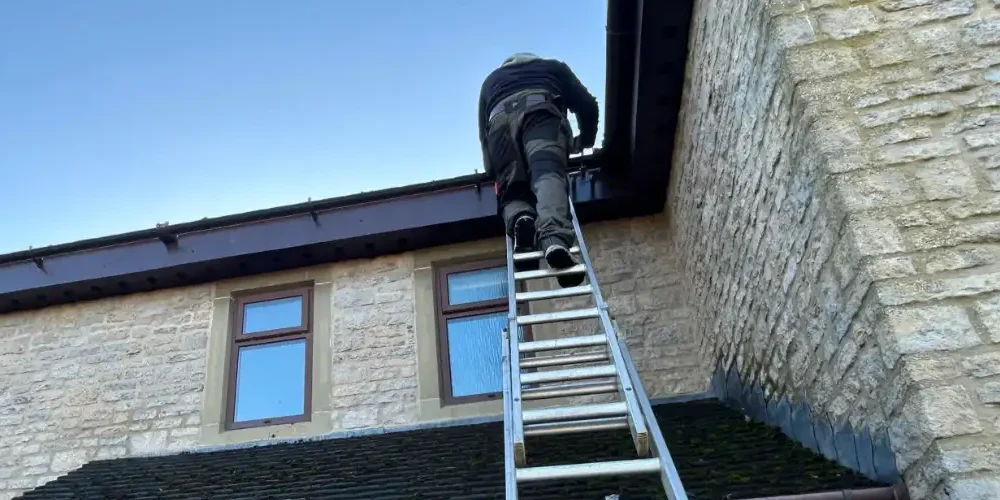
Working on gutters means working at height. This carries significant risk. The Health and Safety Executive identifies falls from height as one of the leading causes of death and serious injury in the UK.
HSE guidance is clear. Work at height must be properly planned. Those doing it must be competent. Use ladders only for low-risk, short-duration tasks. For anything beyond basic inspection, use scaffolding or tower platforms instead. Gutter cleaning, repair, and replacement should always be carried out by professionals with the right equipment and insurance.
What Homeowners Should Do Next
If your guttering in Cheltenham has not been inspected recently, act now. Look for visible signs from ground level. Check for overflow marks on walls, staining beneath joints, sagging sections, and vegetation in the gutter channel.
However, many of the most damaging problems stay hidden. In Cheltenham, concealed gutter systems behind parapets can fail without any visible warning from the street. A ground-level visual check is not enough if your property has these features.
The safest approach is to arrange a professional inspection. A qualified contractor can assess the entire system and identify issues before they become serious. If you need advice or want to book a service, contact us. You can also read our reviews to see how other homeowners in Cheltenham rate the service. Taking action early always costs less than dealing with the consequences of neglect.
Frequently Asked Questions About Guttering in Cheltenham
How often should gutters be cleaned in Cheltenham?
Clean your gutters at least twice a year. The best times are late autumn (after most leaves have fallen) and spring (to clear winter debris). Properties near mature trees in areas like Charlton Kings, Pittville, and Leckhampton may need three or four clears per year.
How do I know if my gutters need replacing?
Warning signs include persistent leaks across multiple sections, extensive corrosion, repeated joint failures, and chronic sagging that bracket adjustments cannot fix. If annual repair costs are approaching the cost of replacement, it is time to switch. Our guide on when to replace your gutters covers this in detail.
Do I need planning permission to replace gutters in Cheltenham?
For most standard residential properties, no. However, if your property is in a conservation area or is a listed building, you may need permission. Cheltenham Borough Council states that minor alterations affecting external appearance in conservation areas are likely to require planning permission. For listed buildings, like-for-like replacement (such as cast iron for cast iron) is usually required.
What type of guttering is best for period properties in Cheltenham?
Cast iron is the traditional choice for Regency and Victorian properties. It is durable, has a period-appropriate appearance, and may be required by the planning authority on listed buildings. Aluminium is a lighter, lower-maintenance alternative. uPVC is the most affordable option but may not be permitted on listed buildings or in some conservation areas. Our guide to gutter profiles, materials, and types covers all the options.
Can blocked gutters cause damp inside my house?
Yes. When gutters block, water overflows down external walls. Over time, this saturates brickwork and leads to internal damp, mould, and peeling paint. In severe cases, prolonged overflow can also cause foundation damage. Our article on the long journey from a gutter leak to subsidence explains how this progression works.