
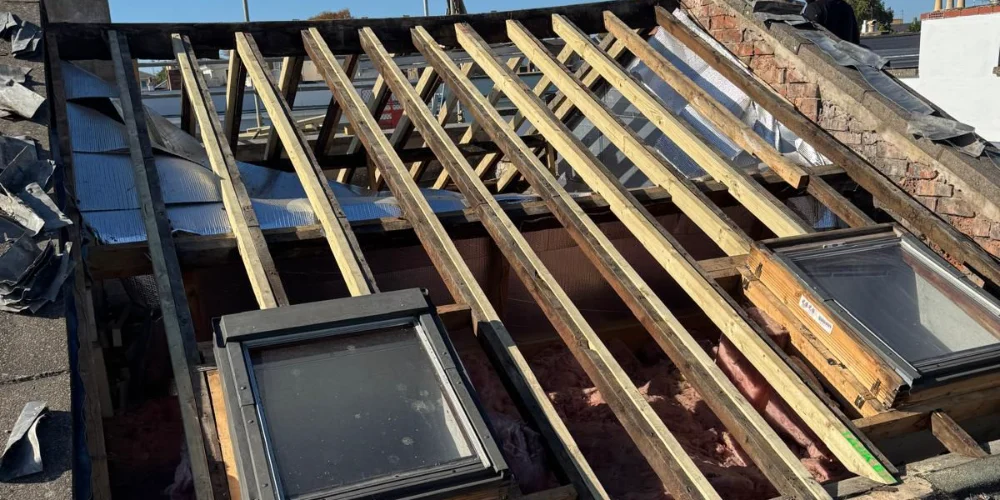
Roof repairs in Cheltenham are rarely as simple as replacing a tile. The visible damage is seldom the full picture. Water enters through one point and travels along timbers and underlay. It can appear somewhere else entirely. A damp patch on a bedroom ceiling may have nothing to do with the roof directly above it.
In Cheltenham, the age and design of the housing stock make diagnosis harder. Many properties feature Regency parapets with concealed gutters. Others have Victorian slate roofs with ageing flashings. These features create multiple potential failure points. Many cannot be assessed from the ground.
This guide explains how roof problems develop and what needs to happen to fix them properly. If you need immediate help, explore our roof repair services or browse our full range of roofing services.
Why Roof Repairs in Cheltenham Start With Diagnosis
How Water Travels Through a Roof
Homeowners often assume that a leak sits directly above the visible damp patch. In reality, water rarely behaves that way. It enters through a defect in the roof covering, then hits the underlay or a timber and tracks along that surface. And, it can travel several metres before dripping onto a ceiling. The Society for the Protection of Ancient Buildings (SPAB) confirms this. Evidence in the loft may not sit beneath the ingress point because water tracks along timbers.
Why Getting Diagnosis Right Matters
Effective roof repairs in Cheltenham, therefore, start with tracing the water path. A contractor who replaces tiles above a damp patch without proper diagnosis will likely leave the real problem unresolved. Cheltenham’s older roof structures make this harder still. Many properties have multiple junctions, valleys, and abutments. Regency buildings with parapets often have concealed box gutters. These can leak internally without any external sign.
If you are unsure whether your roof has a problem, our guide to 10 warning signs that your roof needs immediate attention explains what to look for.
The Most Common Causes of Roof Leaks
Roof leaks follow predictable patterns. Understanding where they occur helps you identify problems early.
Slipped, Cracked, or Missing Tiles and Slates
Tiles and slates move for several reasons. Wind uplift is common on exposed elevations. Age weakens the fixings over time. Thermal movement gradually shifts tiles out of position. Even a single missing tile creates an opening for water. The damage it causes is often disproportionate to how minor the defect looks.
Historic England lists slipped slates and tiles as one of the most common repairable causes of damp. The fix is usually straightforward if you catch it early. However, delay allows the underlay, battens, or timbers to deteriorate. For a full breakdown, read our guide to the top 10 causes of roof leaks.
Chimney and Flashing Failures
Chimneys are one of the most common failure points on any roof. They involve multiple junctions between different materials. Every junction is a potential entry point for water.
Lead flashings seal the gap where the chimney meets the roof covering. Over time, lead can fatigue, crack, or pull away from the mortar joint. Mortar fillets are even more vulnerable. They crack as the building moves. Once a gap opens, water finds its way in.
Beneath the flashings, soakers sit between the roof tiles and the chimney. When they corrode or slip, water penetrates even if the flashings above look intact. If you see damp around a chimney breast, these guides explain the causes: Why Is Water Dripping Down My Chimney Breast? and Is Chimney Flashing Causing My Roof Leak?
Junctions, Ridges, and Valleys
Every point where roof sections meet is a potential trouble spot. SPAB identifies ridges, hips, and chimneys as areas prone to loosening and deterioration.
Ridge tiles along the top of the roof sit in mortar that cracks and erodes over time. Modern best practice, as reflected in BS 5534, favours dry-fix ridge systems. These use mechanical fixings that resist wind uplift more effectively. Valleys channel large volumes of water. Leaves and debris can block them easily. A blocked valley forces water back under the tiles, creating a hidden leak.
Storm Damage and Roof Repairs in Cheltenham
Hidden Storm Damage
Storm damage is not always obvious. High winds can lift tiles slightly without removing them. This creates small gaps that allow water ingress over time. Debris can crack tiles or dislodge flashings. The damage may not show until the next heavy rain, days or weeks later.
Wind Uplift Standards
BS 5534 sets the UK baseline for how roof tiles should resist wind uplift. It accounts for wind zone, site exposure, building height, and roof geometry. Roof repairs in Cheltenham that ignore these factors may leave the roof vulnerable to future storms.
For guidance after bad weather, read Storm Damage Isn’t Always Obvious. Our guide to how fallen branches damage your roofline covers another common cause.
Why Minor Roof Damage in Cheltenham Should Never Be Ignored
A single cracked tile may not seem urgent. However, water damage gets worse over time. It never gets better. Water penetration leads to timber decay, insulation damage, internal damp, and mould growth. What starts as a minor repair can become a major structural problem.
The financial argument is equally clear. A small, prompt repair costs a fraction of replacing rotten timbers or replastering ceilings. If you are unsure, Should I Be Worried About a Small Roof Leak? explains the risks. Also, read why you should never ignore minor roof damage.
Roof Repairs in Cheltenham: What Makes Them Different
Concealed Drainage Behind Parapets
Cheltenham’s housing stock creates challenges that do not apply to newer estates. Many Regency buildings have parapets that conceal the roofline. Behind them sit box gutters and concealed drainage systems. When these fail, water enters the building fabric without any external sign. Historic England notes that parapets and valley gutters often cannot be assessed from the ground. In many cases, a roof survey using drone technology is the most effective way to find these hidden defects.
Conservation Area and Listed Building Requirements
Conservation area controls and listed building consent also affect how you carry out roof repairs in Cheltenham. Cheltenham Borough Council states that most minor alterations affecting external appearance need planning permission in conservation areas. For listed buildings, consent is legally required. Even straightforward repairs may need to use specific materials or techniques.
The Role of Guttering in Roof Failures
Roofs and gutters work as a connected system. When gutters block or fail, water backs up under the roof covering at the eaves. This causes leaks and timber damage. The problem may initially appear to be a roofing issue rather than a guttering one.
If you are dealing with a roof leak, check the gutters at the same time. Blocked or damaged gutters are a frequent contributing factor. This is especially true after autumn leaf fall. You can explore our gutter repair services if you suspect the guttering is involved.
Ventilation and Moisture Management
How Condensation Mimics a Leak
Not all roof problems come from water getting in from outside. Condensation within the roof space is a common issue. It occurs most often where loft insulation has been upgraded or a loft conversion has changed ventilation.
What to Look For
Poor ventilation allows warm, moist air to rise into the roof void. It condenses on cold surfaces. Over time, this causes timber decay, mould growth, and damp. The symptoms look similar to a roof leak but have a completely different cause. Our guide on why roof ventilation matters explains what you can do about it.
Emergency Roof Repairs in Cheltenham
When to Act Immediately
Some situations require immediate action. If water is entering the property or storm damage has left the building vulnerable, the priority is safety. Stop further water ingress as quickly as possible.
What Not to Do
The Health and Safety Executive treats roof work as high-risk. Falls from edges and through fragile surfaces cause serious injuries. Even in an emergency, do not access the roof yourself. Place containers to catch drips and move valuables away from affected areas. Then call a professional.
What a Contractor Will Do
A competent contractor will carry out temporary weathering to stop water ingress. They will then assess the full extent of the damage and plan permanent repairs. Our guide on choosing the right emergency roofer in Cheltenham explains what to look for.
Wildlife and Legal Considerations
Bats
Roof repairs in Cheltenham can affect protected species. Almost all UK bat species roost in roofs. Historic England states that roof works may affect bats and their roosts. Government guidance confirms that bats and their roosts have legal protection. A licence may be required if work is likely to affect them.
Nesting Birds
Nesting birds also have protection under the Wildlife and Countryside Act 1981. The RSPB confirms that removing an active wild bird nest is illegal. The National Federation of Roofing Contractors echoes this. During nesting season (March to August), carry out a pre-work check.
Safety Considerations
Roof work is one of the highest-risk construction activities. The HSE highlights falls from height and falls through fragile surfaces as major causes of death and serious injury. Work at height must be properly planned. Those doing it must be competent. The right equipment must be selected. Treat all roofs as fragile unless confirmed otherwise.
Roof repairs in Cheltenham should always be carried out by qualified professionals. They need the right access equipment, training, and insurance. Do not attempt to inspect or repair a roof yourself. Even checking a single tile carries serious risk.
When Repair Is Not Enough
Sometimes, ongoing roof repairs in Cheltenham become uneconomic. The roof covering may have reached the end of its natural life. Structural timbers beneath may have decayed significantly. Repeated repairs may have failed to resolve persistent leaks. In these situations, a full replacement may be the most cost-effective path forward. Our guides cover the key decisions: roof replacement vs roof repair, what happens during a full roof replacement, how long the work takes, and how much a roof replacement costs in Cheltenham. Base any decision on a proper professional assessment.
What Homeowners Should Do Next
If you suspect you need roof repairs in Cheltenham, act early. Start with a visual check from ground level. Look for missing or slipped tiles, damaged flashings, and signs of water ingress inside the property.
Do not access the roof yourself. The risks are significant. A professional inspection will provide a far more accurate assessment. If you need advice or want to arrange an inspection, contact us. You can also read our reviews to see how other homeowners rate the service. A roof problem caught early is almost always cheaper to fix than one left for years.
Frequently Asked Questions About Roof Repairs in Cheltenham
How do I know if my roof needs repairing?
Look for missing or slipped tiles, damaged flashings, damp patches on ceilings or walls, and debris in gutters after storms. Inside the property, check the loft for daylight coming through the roof, water staining on timbers, and wet insulation. Our guide to 10 warning signs your roof needs immediate attention covers the full checklist.
Why does my roof leak in one place but show damp somewhere else?
Water rarely drips straight down. It enters through a defect and then tracks along timbers and underlay, sometimes travelling several metres before appearing on a ceiling or wall. This is why effective roof repairs in Cheltenham start with proper diagnosis, not with replacing the tiles directly above the damp patch.
Do I need planning permission for roof repairs in Cheltenham?
Standard like-for-like repairs usually do not need planning permission. However, if your property is in a conservation area, changes to the roof’s external appearance may require permission. For listed buildings, consent is legally required for alterations, including changes to roofing materials or methods.
Can I repair my roof myself?
The Health and Safety Executive classifies roof work as high-risk. Falls from height and through fragile surfaces are major causes of serious injury and death. Even checking a single tile carries risk. Roof repairs should always be carried out by qualified professionals with the right access equipment, training, and insurance.
Should I check for bats before having my roof repaired?
Yes. Almost all UK bat species roost in roofs, and they have full legal protection. Historic England states that roof works may affect bats and their roosts. A licence may be required if work is likely to disturb them. During nesting season (March to August), nesting birds are also protected. A pre-work check is essential.